


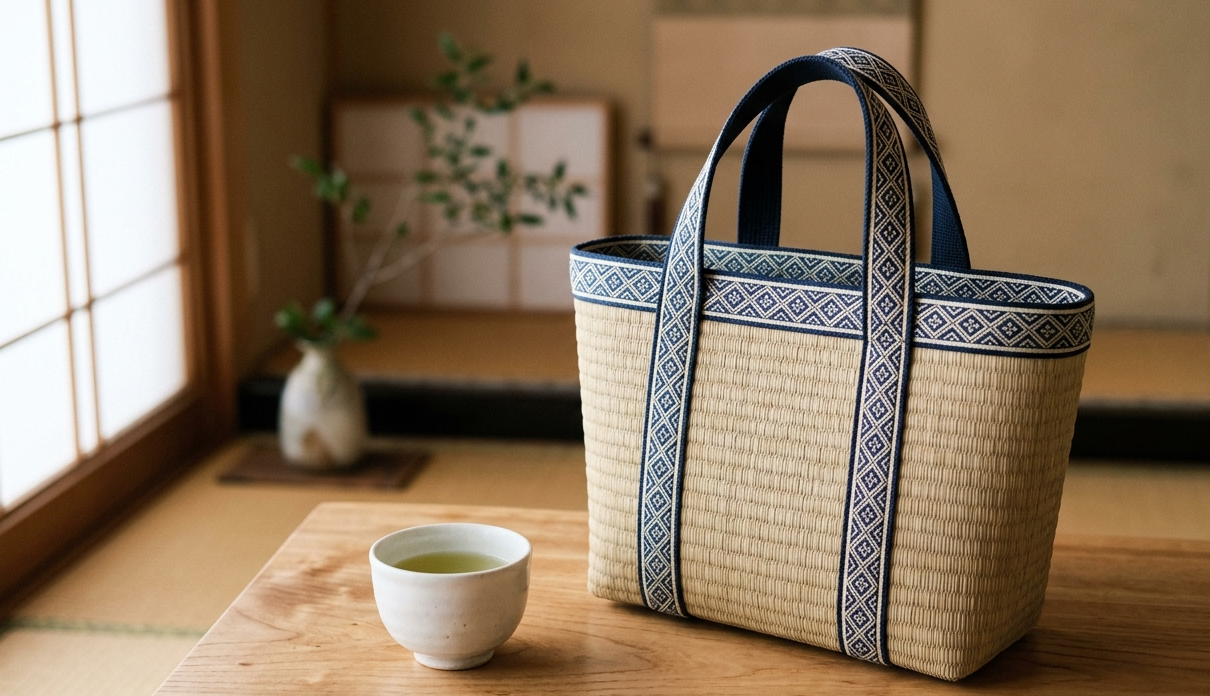
If you’ve ever walked through a Japanese craft shop and spotted a bag made from strikingly geometric, woven ribbon material — you may have already encountered tatami-beri without knowing it.
Tatami-beri bags are one of those quiet, understated pieces of Japanese craft that don’t shout for attention but reward the people who stop to look twice. They’re lightweight, remarkably durable, visually distinctive, and rooted in a tradition that stretches back centuries. For travelers looking for a souvenir that goes beyond the generic, or buyers interested in Japan’s living craft culture, a tatami-beri bag is worth knowing about. If you’re new to the world of traditional Japanese bag styles, tatami-beri is one of the most interesting places to start.

What Is Tatami-Beri?

Tatami-beri (畳縁) is the decorative fabric border sewn along the long edges of a traditional Japanese tatami mat. In everyday Japanese, tatami refers to the woven straw floor mat found in traditional rooms, and beri (or heri) means edge or border.
These borders were never just decorative. Historically, the edge of a tatami mat took the most wear — people stepped on it, furniture pressed against it, and it needed to hold up through years of daily use. So the fabric was made to be exceptionally tough: a tightly woven blend of polyethylene, polypropylene, polyester, and cotton threads. The result is a material that is thin as ribbon but nearly impossible to tear, water-resistant, and flexible enough to fold and bend without cracking or fraying.
For most of its history, tatami-beri served one purpose: the floor. Then Japanese makers started asking a simple question — if this fabric is this strong and this beautiful, why keep it on the ground?
The edge of a tatami mat — and why it matters
In Japan, tatami rooms have long been spaces of ceremony and care. Guests are seated on tatami. Tea ceremonies are performed on tatami. And traditionally, stepping directly on the beri edge — rather than the woven surface — was considered bad manners, in part because the edge often bore the family crest or a pattern that indicated social rank.
That cultural significance is baked into every tatami-beri bag. When you carry one, you’re carrying a piece of material that once held meaning in Japanese domestic and ceremonial life.
Material: light, tough, and flexible
For a practical accessory, the material properties of tatami-beri are unusually good. It weighs almost nothing. It resists light moisture. It doesn’t lose its shape. And it can be woven, folded, or stitched without the stiffness you’d expect from a fabric this durable. Unlike leather or canvas, it doesn’t stretch out of shape over time, and it doesn’t require conditioning or special care.
The Cultural Story Behind the Patterns
One of the most striking things about tatami-beri is the sheer variety of patterns — today, there are more than 200 distinct designs, ranging from restrained geometric motifs to vivid, almost playful color combinations.
200+ patterns, each with a meaning
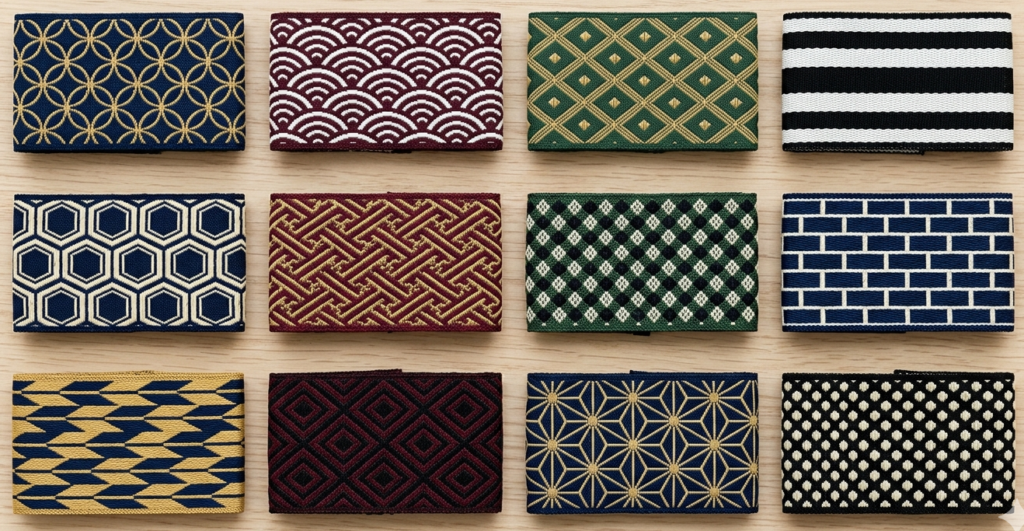
In Japan’s feudal period, the pattern and color of tatami-beri was not a matter of personal taste — it was regulated. Different designs indicated the rank of the household, the status of a room, and the occasion for which the mat was laid. Samurai households used specific patterns. Buddhist temples had their own. The shogunate maintained strict rules about which families could use which borders.
Over time, those regulations loosened, and tatami-beri became a way for craftspeople to express regional aesthetics and personal artistry. The patterns that exist today are the accumulated output of centuries of this tradition — geometric diamonds, interlocking chevrons, soft floral abstractions, bold stripes. Many are still categorized by their original historical use.
When you choose a tatami-beri bag by its pattern, you’re making a choice that once would have been made for you by your social position. There’s something quietly interesting about that.
From tatami floors to modern accessories
The shift from floor material to wearable accessory began gradually in Japan, and has accelerated significantly over the past decade. What started with simple bottle holders — small cylinders made from a single strip of beri, easy to produce and easy to sell at craft markets — expanded into totes, shoulder bags, pouches, and wallets.
Part of what drove this is the tatami industry’s changing circumstances. As fewer Japanese homes feature traditional tatami rooms, demand for full-scale tatami installation has declined. Craftspeople began finding new life for their materials by adapting them to everyday modern use. The bags that resulted aren’t just clever upcycling — they genuinely carry forward the tradition’s aesthetic. Tatami-beri totes and pouches now sit alongside kinchaku, furoshiki, and other distinctly Japanese bag forms as accessible entry points into Japan’s textile craft tradition.
Why Tatami-Beri Makes Such a Good Bag
Lightweight and durable by design
The material was engineered to endure. Tatami-beri doesn’t crack, peel, or fray the way other woven materials can. A well-made tatami-beri bag can be used daily for years without showing significant wear. And because the fabric is so thin and light, even a full-size tote bag weighs far less than its leather or canvas equivalents.
This makes tatami-beri bags particularly practical as travel purchases. They’re flat enough to pack easily, light enough to add to an already heavy suitcase without issue, and sturdy enough to survive the journey home and keep being used afterward.
Water and heat — what to watch for
Tatami-beri is not waterproof. Light rain won’t damage it, but it should be kept away from prolonged moisture. Heat is the bigger concern — direct ironing or leaving it in a hot car can distort the weave. Store it in a cool, dry place and it will last for a very long time with essentially no maintenance.
Types of Tatami-Beri Bags and Accessories

Tote bags — everyday carry
The most common and practical form. Tatami-beri tote bags typically feature woven strips arranged in a basket weave or running horizontal pattern, with fabric or leather handles. They’re structured enough to hold their shape when full, and the woven surface makes for a visually distinctive everyday bag.
Mini shoulder bags
Compact shoulder and crossbody bags have become popular in recent years, particularly among younger Japanese buyers. These tend to feature more contemporary styling — clean lines, minimal hardware, sometimes paired with contrasting strap materials like leather or cotton webbing. A good choice if you want something more polished and less overtly “craft market.”
Pouches and small accessories
Zipper pouches, coin cases, and cosmetic bags made from tatami-beri are widely available and make excellent souvenirs at accessible price points. The small size lets the pattern take center stage, and they’re easy to carry back in luggage.
Business card cases
A specifically Japanese product: the meishi holder, or business card case. In Japanese business culture, business cards are exchanged with formality and care, so a well-made card case carries meaning beyond its function. Tatami-beri card cases are a thoughtful, culturally specific gift that works well for professional contacts.
💡 Looking for help sourcing a specific tatami-beri bag or craft item from Japan?
I offer Japan product research and shopping support on Fiverr — from finding the right craftsman to coordinating international shipping.
Notable Craftsmen and Brands to Know
Kyoto tatami craftsmen — Fujii Tatami
One of the most storied names in tatami-beri craft is Fujii Tatami, based in Kyoto. Established in 1868, the workshop is now in its sixth generation. While the core business remains traditional tatami installation, the current craftsman has made it a priority to adapt the craft for contemporary life — producing mini tatami mats, bags, and accessories alongside the traditional flooring.
What sets Fujii Tatami apart is the emphasis on continuity. The bags they produce use the same beri materials, sourced through the same channels, as the floor coverings they’ve been making for over 150 years. There’s no “craft-market version” — it’s the same workshop, the same hands, the same materials.
Contemporary designers reinventing tatami-beri
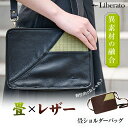
Beyond traditional workshops, a newer generation of Japanese designers has begun treating tatami-beri as a textile rather than a floor material — pairing it with vegetable-tanned leather, structured hardware, and modern silhouettes. Brands like Liberato have produced shoulder bags that combine igusa tatami panels with Japanese leather, creating pieces that feel entirely contemporary while retaining the material’s cultural roots. For a broader look at what Japan’s bag design scene looks like today, our Japanese bag brands guide covers both heritage leather makers and newer independent labels worth knowing.
This range — from traditional workshop to contemporary design — means there’s a tatami-beri bag for almost any aesthetic preference.
Where to Buy Tatami-Beri Bags in Japan
Craft stores in Kyoto and Tokyo
In Kyoto, traditional craft stores around Nishiki Market and the Gion district occasionally carry tatami-beri goods alongside other regional crafts. The product selection varies by season and by store.
In Tokyo, the clearest destination is the Asakusabashi area, which functions as a hub for traditional craft materials and accessory workshops — it’s covered in detail in our Tokyo wholesale districts guide, which is worth reading before your shopping trip. Some stores here sell tatami-beri by the roll alongside finished goods, giving you a sense of the raw material alongside its applications. MA by So Shi Te, a crafts store in Tokyo, carries tatami-beri bags and accessories with an international-shipping-friendly setup.

Online stores that ship worldwide
For buyers outside Japan, the most accessible options are:
- Suigenkyo — an online craft marketplace focused on connecting craftspeople directly with buyers. Their tatami bag section features pieces from named makers with craftsman profiles and messages.
- Dandelions Japan — carries tatami-beri bags alongside kimono-derived textile goods, with international shipping.
- eBay Japan listings — inconsistent, but occasionally the easiest way to find specific patterns or styles.
Try Making One: Tatami-Beri Workshops in Japan
For travelers interested in more than just buying, tatami-beri craft workshops offer a hands-on experience that’s genuinely beginner-friendly. No sewing is required — the material is worked by folding and securing, making it accessible for all skill levels.
In Osaka, several workshop providers offer sessions of one to two hours, covering items like mini tatami mats, smartphone straps, ring cases, and suitcase belts. The choice of patterns is typically wide — some workshops carry more than 200 options — and the finished piece serves as a souvenir you’ve actually made yourself.
Sessions are typically priced between ¥6,000–¥9,000 depending on the item, and are available in English through booking platforms.
FAQ
What does tatami-beri mean in Japanese?
Tatami (畳) refers to the traditional Japanese floor mat made from woven rush grass and a rice straw or wood chip core. Beri (縁) means edge or border. Tatami-beri is the fabric border sewn along the long sides of the mat — historically for durability, later for aesthetic and social signaling.
Is tatami-beri waterproof?
Not fully. The material handles light moisture well but is not designed to be submerged or left wet for extended periods. Heat is a bigger concern — avoid direct ironing and prolonged sun exposure, which can distort the weave.
How do I clean a tatami-beri bag?
Spot clean with a lightly damp cloth and mild detergent. Do not machine wash or tumble dry. Allow to air-dry at room temperature away from direct heat or sunlight.
Can I find tatami-beri bags outside Japan?
A limited selection is available through international shipping from Japanese craft stores and platforms like Etsy, eBay Japan, and dedicated Japanese craft retailers. Variety and availability are much wider within Japan itself.
Are tatami-beri bags expensive?
Small accessories like pouches and card cases typically start around ¥2,000–¥4,000. Full-size tote bags from established makers range from ¥8,000–¥20,000, with artisan or leather-trimmed pieces going higher.
🛒 Interested in buying authentic tatami-beri goods from Japan?
I can research makers, verify product quality, and support your purchase process — all via Fiverr.
Related reading:
Tokyo Wholesale Districts to Know for Buyers and Travelers
Types of Japanese Bags: Traditional Styles and Modern Icons
Japanese Bag Brands Guide: Famous Leather Bags, Backpacks and Designers from Japan



コメント