

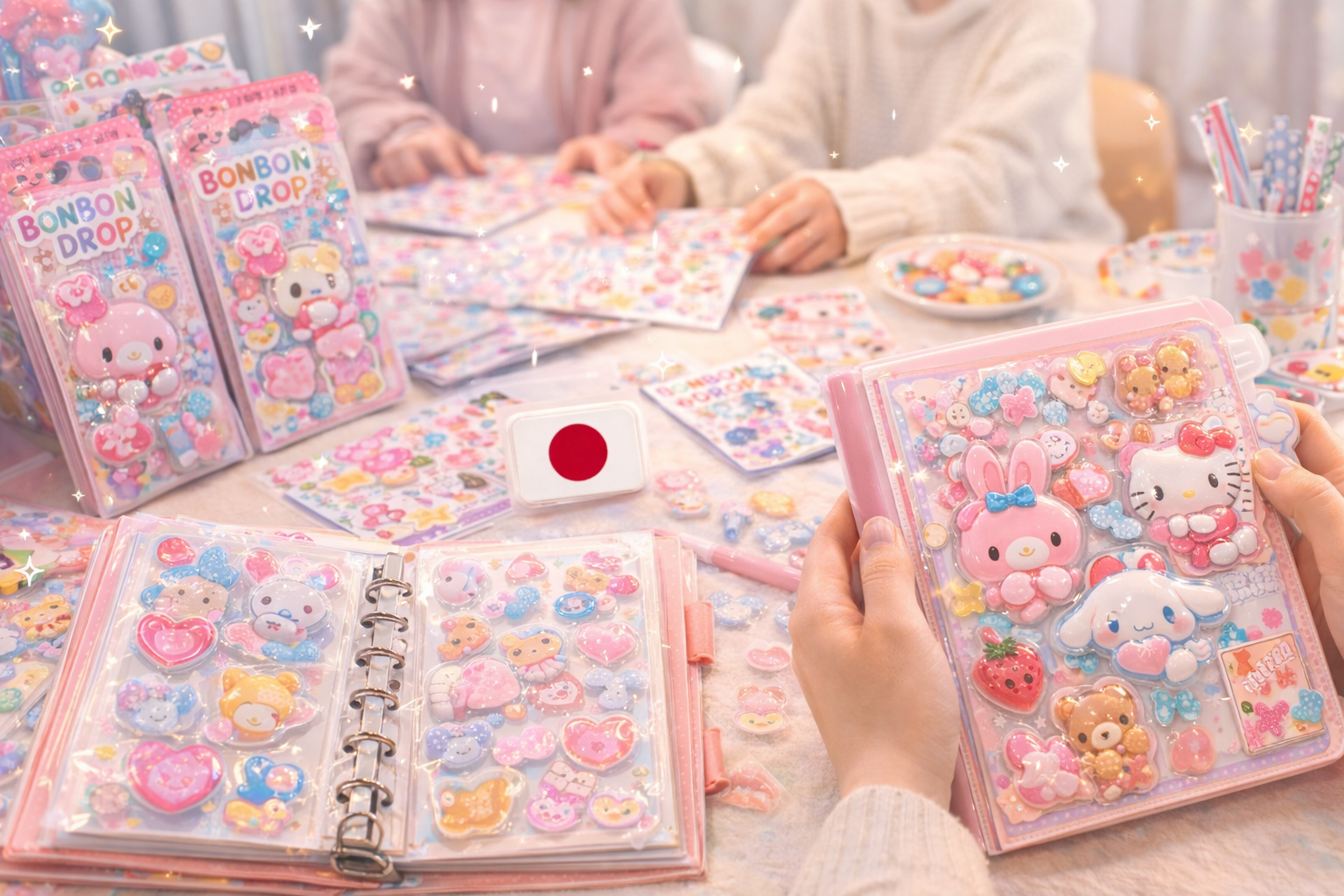
Sticker books are having a real comeback in Japan. Not just among children, but among teens and adults as well. What makes the trend interesting is that it is not only about buying cute stickers. It is also about collecting them, organizing them, swapping them, and treating them almost like small personal treasures. Recent Japanese event materials explicitly describe renewed interest in “seal activities” centered on collecting and exchanging stickers, linked in part to the revival of Heisei-era culture.
That wider culture helps explain why sticker books feel bigger than a simple stationery fad. In Japan today, stickers are part of kawaii culture, nostalgia culture, journaling culture, and social collecting culture at the same time. Puffy stickers like Bonbon Drop Seal are one visible example, but the trend is broader than any one product.
- What are sticker books in Japan?
- Why is seal collecting trending again?
- How Heisei retro helped bring sticker culture back
- What kinds of stickers are popular now?
- Bonbon Drop Seal and the rise of puffy stickers
- Sticker swapping, sticker cafés, and social collecting
- Are sticker books only for kids?
- Where can you buy sticker books and stickers in Japan?
- Are Japanese sticker books worth trying?
- Final thoughts
- Need help sourcing Japanese stickers and sticker books from Japan?
What are sticker books in Japan?
In the simplest sense, a sticker book is a notebook, binder, or dedicated album used to store and display stickers. In Japan, this can mean several different things: a casual seal book for collecting favorites, a planner or journal decorated with stickers, or a more organized binder where stickers are kept neatly for swapping or future use.

What makes the Japanese version interesting is the care people put into storage and presentation. The recent OSP announcement for Bungu Joshi Haku in Osaka promoted products like sticker backing sheets designed to keep even puffy or older stickers from peeling off easily, which shows that storage has become a real part of the hobby.
Why is seal collecting trending again?
One major reason is nostalgia. The 2026 OSP announcement directly links the renewed attention around sticker collecting and sticker exchanging to the revival of Heisei culture. In other words, part of the boom comes from adults and younger fans rediscovering the fun of the sticker habits that were popular in the 1990s and 2000s.
Another reason is that stickers are highly shareable online. Bonbon Drop Seal was described by Q-LiA as a product that became a hot topic on social media, and Mainichi reported that the 3D sticker trend grew so popular that many shops sold out. When stickers are photogenic, collectible, and easy to show off in short videos or desk photos, the trend spreads quickly.
A third reason is accessibility. Compared with more expensive hobbies, stickers are easy to start collecting. A single pack can feel like a treat without being a major purchase, and it is easy to keep building a collection over time.
How Heisei retro helped bring sticker culture back
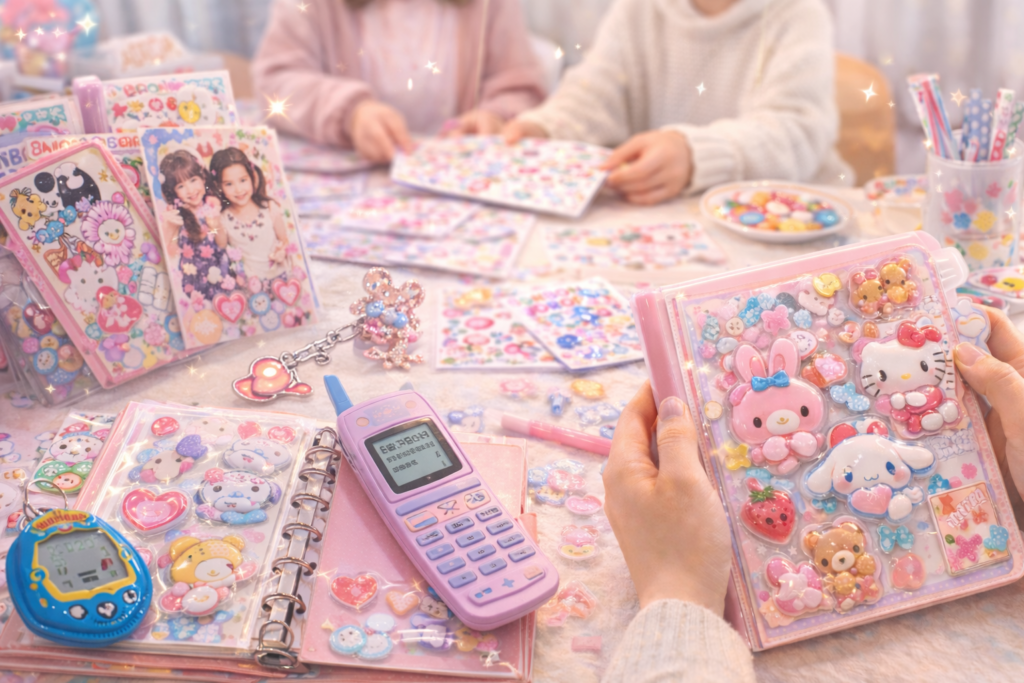
Heisei retro has helped make sticker collecting feel current again instead of childish. Rather than treating older-style cute goods as outdated, many people now see them as warm, playful, and collectible. The OSP release is especially useful here because it does not just mention stickers in general. It specifically says that Heisei-culture revival is bringing renewed attention to collecting and exchanging stickers.
That matters because sticker books fit perfectly into nostalgic collecting. They feel personal, visual, and slightly analog in a way that matches the broader appeal of retro cute culture. Even when the stickers themselves are brand new, the habit of storing, arranging, and trading them carries a nostalgic mood.
What kinds of stickers are popular now?
Japanese sticker culture right now is very broad. Popular categories include:
- puffy and glossy 3D stickers
- character stickers
- planner stickers
- decorative seals for journaling
- mini stickers for cards and packaging
- collectible novelty stickers
Bonbon Drop Seal is one of the clearest recent examples because it combines several of these qualities at once: puffy texture, glossy finish, collectibility, and strong visual appeal. Sun-Star’s official Bonbon Drop pages show expansions into character franchises such as Sanrio, Disney, PEANUTS, Chiikawa, Tamagotchi, and more, while Q-LiA also offers original non-character designs.
Bonbon Drop Seal and the rise of puffy stickers
Puffy stickers deserve special mention because they are one of the most visible parts of the current sticker trend. Bonbon Drop Seal is made of PVC and is sold as a glossy, raised, resin-like sticker product. Mainichi’s coverage of the craze described these stickers as transparent, glossy, and three-dimensional, and reported that they sold out in many stationery stores.
That kind of product fits perfectly into sticker-book culture. It is not just something to stick onto paper immediately. It is something you may want to collect first, compare with other designs, photograph, and save carefully. That is one reason products for sticker storage are getting attention alongside the stickers themselves.
If you want a closer look at that specific trend, read our guide to What Are Bonbon Drop Seal Stickers? Japan’s Puffy Sticker Trend Explained.
Sticker swapping, sticker cafés, and social collecting
One of the most interesting parts of the trend is that it has become social again. Sticker culture in Japan is no longer only about buying products alone. People also swap stickers, organize them together, and share collections as part of a community experience.
A strong example is Sharepuku Harajuku. Rurubu Kids reported that this Harajuku venue, opened in December 2025, is a sticker exchange café where visitors can swap stickers with staff and other customers, and can also purchase stickers inside the venue. That kind of space shows how sticker collecting has moved beyond individual ownership into a shared hobby culture.
This social side helps explain why sticker books matter. If you collect stickers seriously, you need a way to store them, protect them, and bring them with you. A sticker book becomes part of the hobby, not just an accessory.
Are sticker books only for kids?
Not at all. The current Japanese trend clearly reaches beyond children. The language around the recent sticker boom focuses on collecting, exchanging, nostalgia, and display, which all point to older fans as well. Bonbon Drop Seal, for example, has been framed as part of a broader social-media and stationery-store trend rather than a children-only product.
In practice, sticker books appeal to many different users:
- travelers who want small souvenirs
- journalers and planner users
- kawaii stationery fans
- nostalgia-driven collectors
- people who enjoy organizing cute items visually
That range is one reason the trend feels sustainable rather than temporary.
Where can you buy sticker books and stickers in Japan?
Japan does not have one single “sticker book” shopping route, but there are several good places to start. Larger stationery events and stores are an obvious entry point. Bungu Joshi Haku, for example, is one of Japan’s major stationery festivals, and its Osaka 2026 coverage highlights stickers, stamps, notebooks, and related goods across a large number of exhibitors.
In everyday shopping, sticker books and stickers are most likely to appear in:
- stationery stores
- kawaii and character-goods shops
- larger lifestyle retailers
- selected bookshops
- online shops from official brands and makers
If you are planning a trip, see our guide to where to buy Japanese stationery in Japan.
Are Japanese sticker books worth trying?
Yes, especially if you enjoy cute Japanese goods, small collectibles, or journaling culture. Sticker books are one of those hobbies that are easy to enter but surprisingly satisfying to build over time. They also offer something very Japanese in style: a blend of order, cuteness, nostalgia, and attention to small details.
They are especially worth trying if you like:
- kawaii stationery
- small-format collectibles
- Heisei retro trends
- decorating journals or planners
- social hobbies like swapping and sharing
Even if you are not a lifelong sticker collector, the current trend is easy to appreciate because it connects products, storage, and community so neatly.
Final thoughts
Sticker books in Japan are trending again because they sit at the intersection of several current interests: kawaii culture, Heisei nostalgia, collectible goods, and social sharing. The hobby is simple, but it has become richer through puffy sticker trends, dedicated storage products, and even sticker exchange cafés.
That is why the trend feels bigger than just “cute stickers.” In Japan right now, sticker books are part memory book, part collection system, and part social hobby. That combination is exactly what makes them so interesting to overseas readers too.
Need help sourcing Japanese stickers and sticker books from Japan?
If this guide helped you narrow down the kinds of stickers or sticker books you want, but you still need help finding specific products, comparing shops, or arranging international shipping, I also offer Japan sourcing support on Fiverr.
This is useful if you want to:
- find cute Japanese stickers and sticker books
- compare puffy stickers, character stickers, and storage goods
- source giftable or resell-friendly Japanese stationery
- get help with communication, purchasing, and shipping from Japan
You can check my Fiverr Japan sourcing gig here:

コメント