


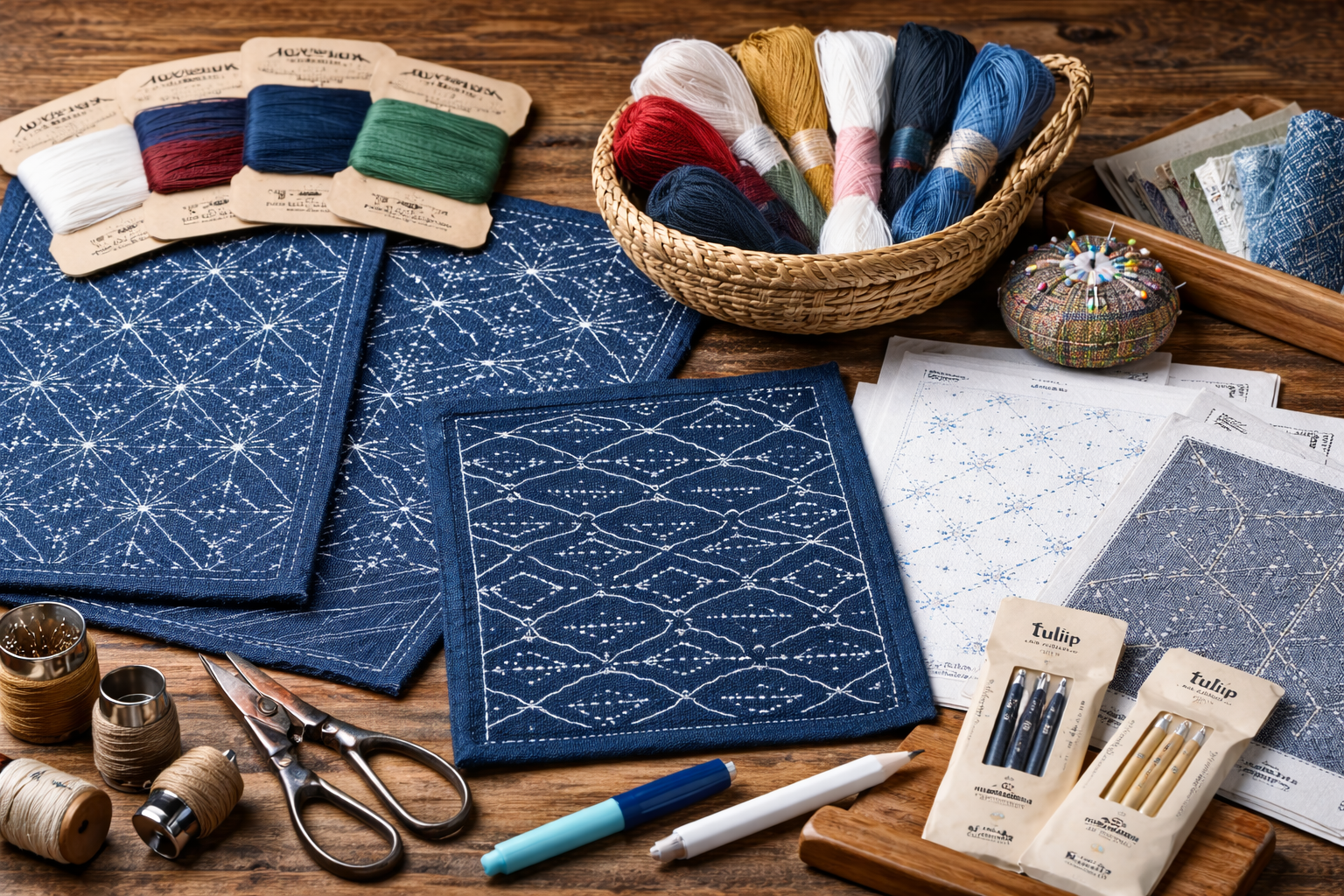
Before we dive in: if you’re searching for sashiko supplies, sashiko thread, sashiko needles, or where to buy sashiko supplies in Japan, this guide is built to help you buy the right basics fast—especially if you’re ordering from overseas or assembling a starter bundle. If you’re brand new to the craft itself, start here first: Sashiko for Beginners. For the bigger context across crafts, see Japanese Craft: A Complete Guide.
- What Makes “Sashiko Supplies” Different?
- The Core Trio: Needle, Thread, Fabric
- Sashiko Thread: Types, Thickness, and Color Choices
- Sashiko Needles: What to Look For (with Japanese examples)
- Fabric Options: Pre-printed vs. Plain + Best Weaves for Beginners
- Marking & Prep Tools (that actually matter)
- Optional Upgrades (nice-to-have, not required)
- Starter Kit Checklist (Copy/Paste)
- Where to Buy Sashiko Supplies in Japan (In-store + Online)
- Buying from Overseas: Common Problems + How to Solve Them
- Want Me to Source and Consolidate Your Sashiko Order from Japan?
What Makes “Sashiko Supplies” Different?
Sashiko is built on simple running stitches—but the look and durability come from using materials designed for sashiko: typically thicker thread, longer needles with larger eyes, and stable woven fabric that holds straight lines cleanly.
If you’ve tried sashiko using regular embroidery floss and short needles, you can still stitch—but you’ll often get a different texture and more hand fatigue.
If you want the stitching basics + first project flow, see Sashiko for Beginners.
The Core Trio: Needle, Thread, Fabric
1) Sashiko thread
Sashiko thread is usually used as-is (not split) and is made to show a bold, slightly raised stitch line.
Japanese reference brand: Olympus has a dedicated sashiko lineup that includes thread, needles, fabric packs, and kits.
2) Sashiko needle
Sashiko needles tend to be longer and designed for loading multiple stitches (helpful for rhythm stitching).
Japanese reference brand: Tulip (Hiroshima) produces sashiko needle lines including “big eye straight” styles intended for sashiko stitching.
3) Fabric
For clean sashiko lines, choose a tight, stable weave (cotton/linen blends are common). Beginners usually do best with woven fabric (not stretchy) and medium weight.
If you’re also curious about other Japanese thread crafts (beyond sashiko), you may like Japanese Needlework Explained or Japanese Temari Ball Explained.
Sashiko Thread: Types, Thickness, and Color Choices
When shopping in Japan, you’ll see variations like:
- Standard sashiko thread
- Thin/Fine sashiko thread (useful for lighter fabric or more delicate detail)
- Variegated/shaded colors
- Sometimes decorative variations (e.g., lamé)
Olympus’ official shop categorizes multiple sashiko thread styles (including thin/fine and shaded/colorful variants), which is helpful when you want consistent naming across skeins.
How to choose thickness
- Beginner + classic look: standard thread on medium-weight fabric
- Neat, detailed patterns / lighter cloth: thin/fine thread (less bulk, more delicate lines)
If you want pattern ideas and meanings that pair well with classic thread choices, go back to Sashiko for Beginners.
Sashiko Needles: What to Look For (with Japanese examples)
Key needle features that matter:
- Length: longer needles reduce hand strain and support “loading” stitches
- Eye size: a larger eye makes thicker sashiko thread easier to thread
- Finish: smoother finish = less friction = easier stitching
Tulip’s sashiko needle listings emphasize a straight needle shape and a large eye designed for sashiko work.
If you’re interested in “Japan tool quality” comparisons more broadly, see Japanese Knitting Needles Comparison (same logic: smoothness, consistency, hand feel).
Fabric Options: Pre-printed vs. Plain + Best Weaves for Beginners
Pre-printed (or pre-marked) sashiko cloth
Best for:
- First project confidence
- Fast setup
- Cleaner results early on
Olympus offers sashiko fabric and kits within its sashiko product lineup, including fabric packs (often used for projects like “Hana-Fukin”).
Plain fabric + self-marking
Best for:
- Custom designs
- Visible mending on clothing
- Scaling up to larger projects
Beginner fabric tip: avoid very loose weave and avoid stretch; your grid lines will stay straighter and stitch length becomes easier to control.
If you’re shopping fabric in Tokyo, this route helps a lot: Tokyo Craft Shopping: Yuzawaya + Nippori Fabric Town.
Marking & Prep Tools (that actually matter)
You don’t need fancy gear, but these help a lot:
- Washable fabric pen / chalk (depends on your fabric color)
- Ruler / quilting ruler for grids
- Clips or basting to hold layers if you’re mending or quilting-style stitching
If you also do patchwork, you’ll like Quilting in Japan (lots of overlap in rulers, marking, and fabric shopping).
Optional Upgrades (nice-to-have, not required)
- Sashiko thimble (helps push the needle efficiently)
- Needle puller (useful when stitching through thicker layers)
- Small scissors / thread snips
Starter Kit Checklist (Copy/Paste)
Beginner (minimum viable kit)
- 1–2 sashiko needles (long, big eye)
- 2–4 colors sashiko thread
- 1 pre-printed sashiko cloth OR 1 piece of medium-weight woven cotton
- washable marker + ruler
- small scissors
Intermediate (upgrade kit)
- multiple needle sizes (thin + thicker options)
- standard + thin/fine thread
- mix of pre-printed cloth and plain fabric
- thimble + needle puller
- storage case (keeps needles safe and threads tidy)
Where to Buy Sashiko Supplies in Japan (In-store + Online)
1) Brand official sources (consistent SKUs)
- Olympus official sashiko lineup / official online shop (threads, needles, fabrics, kits)
2) Major craft retailers (broad selection)
- Yuzawaya (ユザワヤ) is a major Japanese craft retailer and carries sashiko-related categories online, including kits and supplies.
If you’re traveling and want a “what to buy + where to go” route, use:
Tokyo Craft Shopping: Yuzawaya + Nippori.
And if you want a broader craft day itinerary beyond textiles, see:
Tokyo Craft Day: Aoyama Square + Mingeikan + Ginza Takumi.
Buying from Overseas: Common Problems + How to Solve Them
Common issues
- Japanese-only checkout or payment methods
- Inventory scattered across multiple stores
- Hard-to-compare variants (thread thickness, color series, kit versions)
- Shipping consolidation (especially if you want a “curated kit”)
Practical fix
- Build your shopping list as a “bundle” (needle + 2–4 threads + fabric) and source from one place when possible (official lineups help with this).
- If you’re mixing brands (e.g., Olympus thread + Tulip needles), plan consolidation so everything arrives together.
For the “start stitching” instructions that match this bundle, see Sashiko for Beginners.
Want Me to Source and Consolidate Your Sashiko Order from Japan?
If you want authentic sashiko supplies from Japan—especially if you’re building a bundle from multiple shops or buying in quantity—I can help via my Fiverr Japan Sourcing Gig with:
- purchasing from Japanese stores (brand official shops + craft retailers)
- consolidating multiple orders into one shipment
- basic inspection (correct SKUs, colors, quantities)
- international shipping coordination

コメント