


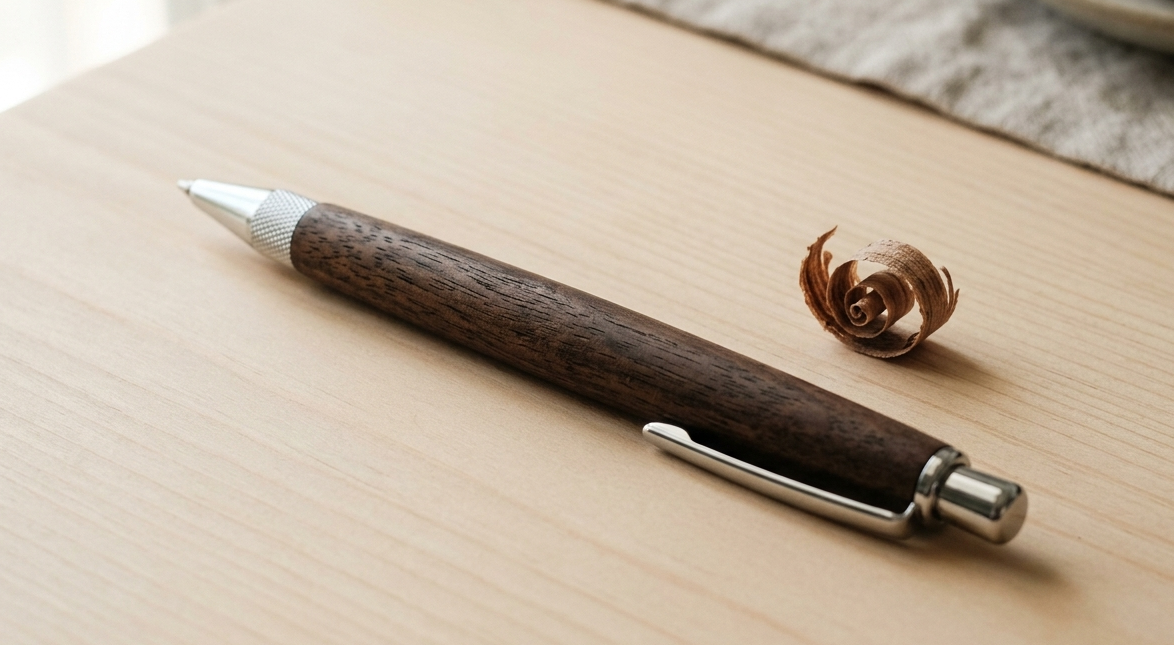
Walk into any serious stationery shop in Japan and you’ll find them tucked between the gel pens and notebooks: pens with barrels made of actual wood. Not wood-effect plastic, not faux-grain resin. Real timber, with a grain that runs differently on every single piece.
Japanese wooden barrel pens — known in Japanese as mokujiku pen (木軸ペン) — have quietly built a devoted following among stationery collectors worldwide. They sit at an unusual intersection: precision-engineered Japanese writing instruments housed in a material that is inherently imperfect, individual, and alive in a way that metal or plastic can never be. For travelers and buyers looking for a Japanese stationery purchase that goes beyond the functional, a wooden barrel pen is worth understanding. If you’re already exploring the range of Japanese stationery available when visiting Japan, this category deserves a closer look.
What Is a Japanese Wooden Barrel Pen?
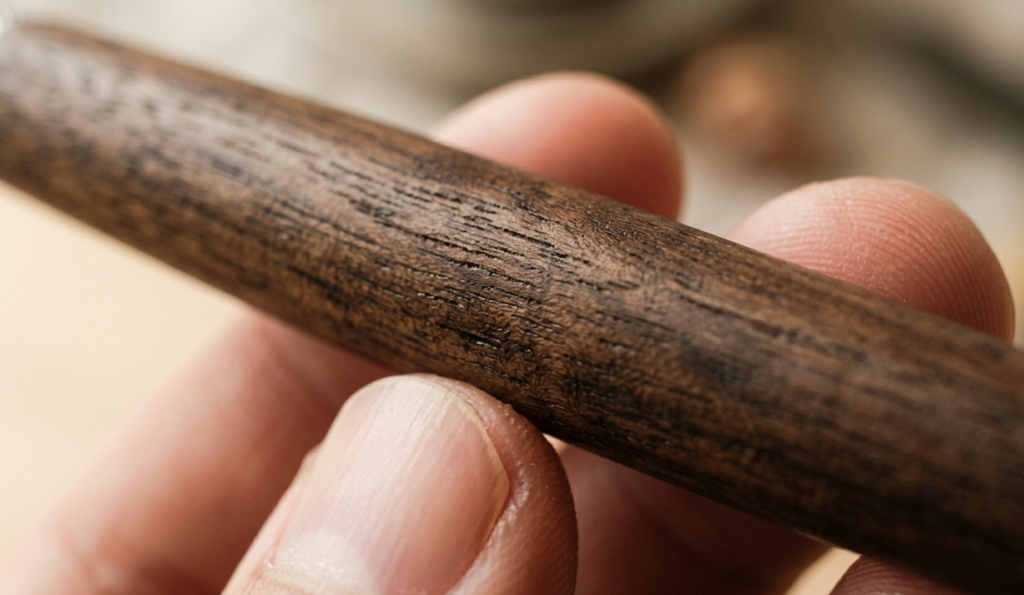
A wooden barrel pen is exactly what it sounds like: a ballpoint, mechanical pencil, or fountain pen whose body is made from natural wood rather than the more common metal or resin. The mechanism inside — the ink cartridge, the advancing system, the nib — remains the precision-engineered component you’d expect from a Japanese manufacturer. The wood provides the handle, the feel, and the visual character.
In Japan, the category spans a wide range: mass-market models from major manufacturers like Pilot and Mitsubishi, mid-range pieces from specialist stationery brands, and fully handmade pens turned on a lathe by individual craftspeople in workshops across the country. At every level, the core appeal is the same — a writing experience that feels grounded and warm in a way that engineered materials simply don’t replicate.
Why Wood? The Appeal of Natural Materials in Japanese Stationery
Each pen is one of a kind
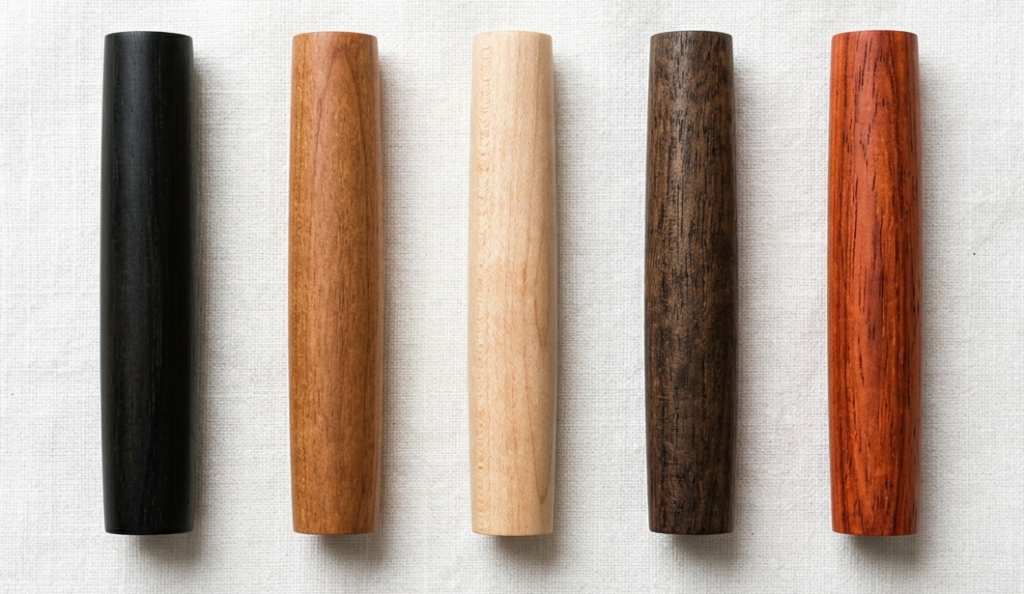
Natural wood grain is never repeated. The pattern in a piece of keyaki (Japanese zelkova), kuro-gaki (black persimmon), or maple is produced by decades of growth and cannot be designed, printed, or manufactured. Two pens made from the same piece of timber will still look different. For stationery enthusiasts who collect carefully and notice these things, that individuality matters.
It ages with you
Wood develops a patina with use. The surface of a wooden barrel pen deepens in color, develops a subtle sheen from hand oils, and begins to carry the specific marks of how it has been used. A metal pen can be polished back to its original state; a wooden one cannot, and that’s the point. The aging is the experience. Many long-term users describe the process with the same language used for quality leather or cast iron cookware — it becomes yours in a way that other materials don’t.
A wood species guide: popular choices explained
The species used for wooden barrel pens have distinct visual personalities. Keyaki (zelkova) has a flowing grain in grey-brown tones and is one of the most traditional choices. Kuro-gaki (black persimmon) develops striking dark streaks through a warm brown body — no two pieces look alike, and high-quality kuro-gaki is considered rare. Kuri (chestnut) reads warm and relatively light. Walnut and ebony appear frequently in both Japanese artisan work and premium international brands. Harder species hold their shape better over years of use; softer ones tend to show character more quickly.
Types of Japanese Wooden Barrel Pens
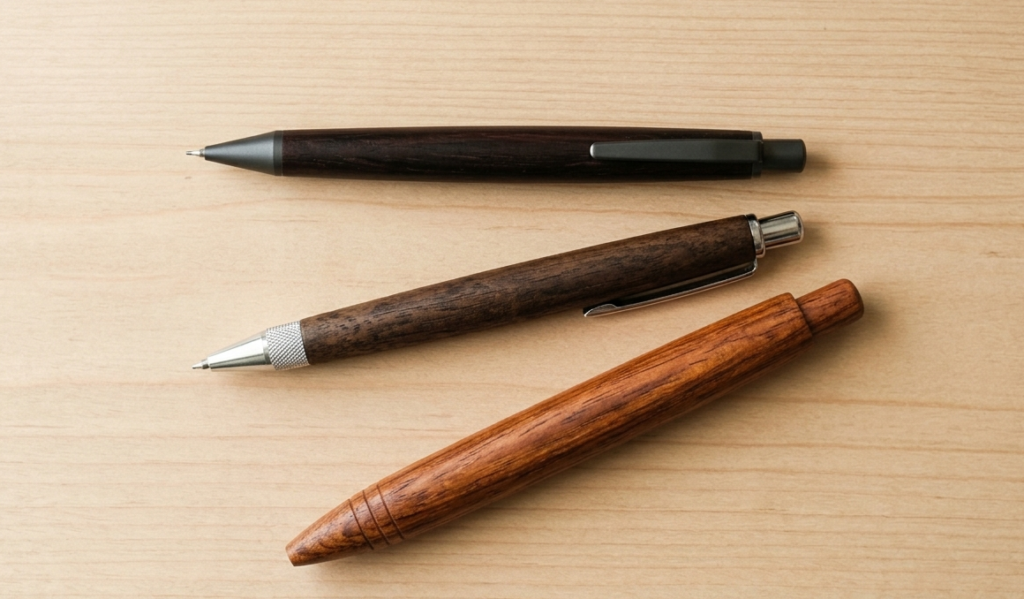
Wooden ballpoint pens
The most accessible category. Major manufacturers produce wooden ballpoint pens at multiple price points, and artisan workshops produce handmade versions in dozens of timber species. Ballpoint mechanisms are standardized and refillable, so the pen can last indefinitely with basic upkeep. Good entry point for first-time buyers.
Wooden mechanical pencils
The mechanical pencil is where the Japanese engineering tradition and the wood-barrel aesthetic come together most naturally. Models like the Pilot S20 were originally developed for technical drafting — low center of gravity, precise lead advancement — but the wooden body transforms them into something that also happens to feel remarkable in the hand. The pencil barrel shows grain without any coating to interrupt it, which tends to read more authentically than lacquered ballpoint versions.
Wooden fountain pens
The most considered purchase in the category. Wooden fountain pens require more maintenance than ballpoints — ink can interact with wood if seals fail — but the writing experience is distinct. Pilot’s Capless series and several artisan workshop offerings pair wood with high-quality nibs for a result that stationery collectors describe as among the most satisfying writing instruments available. Higher price point, but built for decades of use.
Brands and Makers Worth Knowing
Pilot S20 — the classic entry point
The Pilot S20 is the pen that introduces most people to wooden barrel mechanical pencils. Originally designed for technical drafting, it uses a birch wood barrel infused with resin for durability — the result is smooth to the touch, slightly matte, and noticeably warmer than the metal body of equivalent drafting pencils. The S20 comes in several colorways (dark brown, mahogany, black) and is widely available both in Japan and internationally. Price point: around ¥2,000–¥3,000, making it the most accessible entry in this guide.
It pairs naturally with the rest of what’s worth picking up at a good Japanese stationery shop — the LOFT stationery guide covers where to find it alongside notebooks, inks, and other stationery worth carrying home.

Mitsubishi Pure Malt — whisky barrel meets pen
The Mitsubishi Uni Pure Malt has a story worth telling: the oak used for its barrel comes from whisky aging casks that spent over 50 years maturing spirits. The wood is then dried for a further 50 years before being turned into pen barrels. No stains, no dyes — the deep brown color is entirely the result of time and the whisky itself.
The result is a pen with a distinctive visual weight and a surface that smells faintly of aged wood. It writes smoothly with Mitsubishi’s Jetstream-grade oil-based ink, and it comes in versions ranging from a simple ballpoint to a 4+1 multi-pen. Price range: ¥3,000–¥8,000 depending on configuration. One of the most giftable Japanese stationery items at any price point.
Nohara Kogei — handmade artisan workshop
Nohara Kogei (野原工芸) is based in Nagiso, Nagano Prefecture — an area with a long tradition of rokuro-zaiku, or lathe woodworking. The workshop produces wooden barrel pens and pencils entirely by hand, using domestic and imported rare timber species including Hawaiian koa, kuro-gaki, and mulberry. Each pen is turned individually, assembled with custom-developed mechanical components, and can be engraved to order.
Nohara Kogei pens require an appointment visit to the workshop or purchase via their online store, and the price reflects the craftsmanship: typically ¥15,000–¥40,000+ depending on timber species. For buyers interested in a pen as a lasting object rather than a daily tool, this is the most considered choice in the Japanese handmade category.
💡 Looking for help sourcing a specific Japanese wooden pen — or unsure which brand and timber to choose?
I offer Japan stationery research and product sourcing support on Fiverr, from identifying the right maker to coordinating purchase and shipping.
Price Guide: From ¥2,000 to Custom Order
| Level | Price range | What you get |
|---|---|---|
| Entry | ¥2,000–¥4,000 | Pilot S20, Mitsubishi Pure Malt standard. Mass-market quality with real wood. |
| Mid-range | ¥4,000–¥12,000 | Pure Malt Premium, multi-pen configurations, Faber-Castell Ambition series. |
| Artisan | ¥15,000–¥40,000 | Nohara Kogei and comparable handmade workshops. Rare timber, lathe-turned. |
| Custom / bespoke | ¥40,000+ | Workshop commissions with specific timber, engraving, and custom mechanisms. |
The entry tier is the most reliable starting point for travelers who haven’t handled a wooden barrel pen before. The difference in feel between ¥2,000 and ¥40,000 is real — but so is the difference between owning a wooden barrel pen and owning none at all.
Where to Buy Wooden Barrel Pens in Japan
Stationery shops and department stores
The best in-store selection in Tokyo is at Itoya in Ginza — seven floors of stationery with a dedicated pen section that stocks both the Pilot and Mitsubishi lines alongside imported European wooden pens. LOFT and Tokyu Hands carry the major brands at accessible prices, and our LOFT stationery guide covers what to look for in-store. Maruzen Marunouchi and Kinokuniya also carry curated pen sections worth visiting.
For higher-end and artisan pieces, the Pen Show calendar in Tokyo (usually held in autumn) brings together dozens of Japanese and international makers in one venue. Individual workshops like Nohara Kogei require advance reservation.
Wholesale and import districts
The Asakusabashi area in Tokyo functions as a hub for stationery and craft materials — covered in detail in our Tokyo wholesale districts guide. Some suppliers here carry pen components and raw timber blanks alongside finished goods, which is worth seeing if you want to understand how the pens are made.
Online stores that ship internationally
- JetPens — the most comprehensive English-language Japanese stationery retailer. Carries the full Pilot S20 range, Pure Malt series, and a solid selection of artisan pens. US-based with established international shipping.
- Bungu.store — Tokyo-based curated stationery shop shipping worldwide. Strong on the Pure Malt series and boutique Japanese brands.
- Tokyo Pen Shop — US-based shop specializing in Japanese pens and stationery, including wooden barrel models.
Is It Worth Buying as a Gift?
Wooden barrel pens are among the strongest gift options in the Japanese stationery category because they communicate something beyond function. The story of the material — wood aged for decades, or timber from a specific Japanese prefecture, or a grain pattern that exists nowhere else — gives the gift a narrative that the recipient can carry with them.
The Pure Malt’s whisky barrel origin is particularly effective as a gift story: it’s the kind of detail that stays with people. For Japanese stationery and paper goods paired as a set, a wooden pen alongside a quality Japanese notebook makes a cohesive and genuinely personal gift.
Packaging is worth considering. Pilot and Mitsubishi include quality boxes with their premium lines. Artisan workshop pens typically come in handmade wooden or cloth cases. Both travel well.
FAQ
What is a wooden barrel pen called in Japanese?
木軸ペン (mokujiku pen), literally “wooden-barrel pen.” Mojiku (木軸) means wooden barrel or wooden shaft. The term covers ballpoint pens (ボールペン), mechanical pencils (シャープペンシル), and fountain pens (万年筆) equally.
Are Japanese wooden barrel pens waterproof?
The barrels are generally sealed or resin-treated and handle normal use well. Prolonged submersion in water is not recommended. The Pilot S20 uses resin-infused birch, which is more moisture-resistant than untreated wood. Artisan pens vary by finish — oil-finished wood is more susceptible to moisture than lacquer-finished.
Can I refill a wooden ballpoint pen?
Yes. Most wooden barrel ballpoints use standard refill cartridges (Parker-compatible or manufacturer-specific). The Pure Malt uses Mitsubishi’s standard oil-based refills; the Pilot S20 ballpoint uses Pilot’s standard refills. Artisan workshop pens typically accept one of the common standard formats.
Do wooden pens smell like wood?
Untreated or lightly oiled wood retains a faint natural scent that fades with use. The Pure Malt oak, being fully dried over decades, is essentially odorless. Some tropical hardwoods (rosewood, sandalwood) retain a distinctive scent for longer. It’s generally subtle and considered part of the appeal.
Where can I buy Japanese wooden pens online if I’m not visiting Japan?
JetPens is the most reliable English-language option for mass-market models. For artisan and workshop pieces, Nohara Kogei ships internationally via their online store. Proxy shopping services (Buyee, Zenmarket) can access Japanese-language stores that don’t ship directly overseas.
🛒 Want a specific Japanese wooden pen but not sure where to start?
I research makers, compare options, and support your purchase from Japan — all via Fiverr.
Related reading:
コメント