

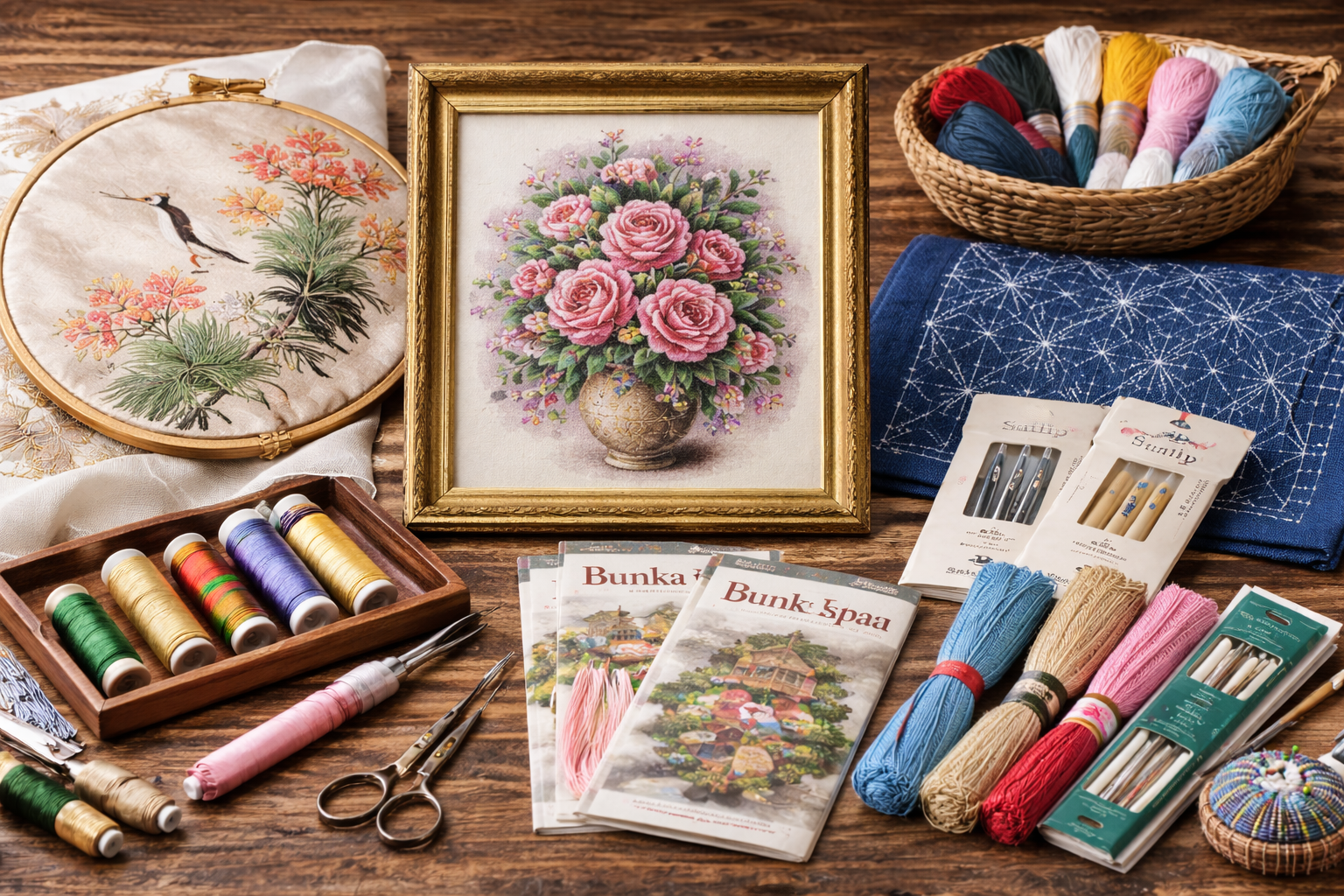
If you’re searching “Japanese needlework”, “Nihon Shishu”, “Bunka embroidery”, or “Japanese embroidery art”, you’re probably trying to figure out what these terms actually mean—and which one matches your goals (heritage textile art, a displayable “picture embroidery,” or practical stitch work like sashiko). This guide breaks down the three most commonly confused categories—Sashiko vs Nihon Shishu vs Bunka Shishu—with beginner-friendly buying checklists and sourcing tips.
If you’re building a broader craft knowledge base, start here: Japanese Craft: A Complete Guide. If you came here from sashiko and want to compare techniques, start with Sashiko for Beginners and the shopping list Sashiko Supplies Guide
- What “Japanese Needlework” Means (and why it’s broader than Sashiko)
- Nihon Shishu (Japanese Embroidery): Traditional Kimono-Style Embroidery
- Bunka Shishu: Picture-Style Punch Embroidery (Kits + Tools)
- Quick Comparison: Sashiko vs Nihon Shishu vs Bunka
- What to Buy First (Beginner Shopping List by Style)
- Where to Learn or Find References
- Buying from Overseas: Practical Tips
- Want Help Sourcing Japanese Needlework Tools and Kits?
What “Japanese Needlework” Means (and why it’s broader than Sashiko)
Search terms like “Japanese needlework” often lead people to sashiko—but in Japan, “needlework” can include a wide range of textile techniques, from highly ornamental embroidery used on kimono to modern kit-based crafts.
In this guide, we’ll focus on two terms that often confuse beginners:
- Nihon Shishu (日本刺繍): classical Japanese embroidery associated with kimono/obi and traditional textile arts.
- Bunka Shishu (文化刺繍): a picture-style embroidery technique (often described as punch-needle-like) using specialized needles and rayon thread to create painterly images.
If your reader’s entry point is “I want something beginner-friendly and practical,” send them first to: Sashiko for Beginners.
Nihon Shishu (Japanese Embroidery): Traditional Kimono-Style Embroidery
Nihon Shishu is commonly described as Japanese embroidery with a long history (often framed as 1,000+ years). It’s known for refined technique, careful color use, and being used on garments and textiles such as kimono and obi.
What it looks like (in plain buyer terms)
- Elegant surface embroidery, often on silk
- Fine silk threads and sometimes metal threads for accents
- Designs that can be extremely detailed, with a “painterly” sense of shading and depth
Why it’s appealing to overseas buyers
- Strong connection to Japan’s formal textile tradition (kimono culture)
- Materials and craftsmanship signal “heirloom” value
- Less saturated online than sashiko, so niche queries can be winnable with clear explainers
If your audience also loves structured pattern culture (charts, diagrams), cross-link laterally:
Bunka Shishu: Picture-Style Punch Embroidery (Kits + Tools)
Bunka Shishu (often shortened to “Bunka”) is described as a Japanese embroidery style that uses a specialized needle and rayon threads to build richly textured images—sometimes compared to paintings. It’s often worked from the front of the fabric and is considered relatively fragile, so it’s frequently presented as framed artwork rather than everyday clothing decoration.
Why Bunka is kit-friendly and giftable
Bunka is well-suited to numbered kits (similar to paint-by-number logic), which lowers the entry barrier for beginners who want an impressive finished piece without designing from scratch.
If your readers like “craft as décor,” connect them to other giftable Japanese crafts:
- Japanese Temari Ball Explained (displayable thread craft)
- Washi Paper Crafts in Japan (lightweight, gift-ready materials)
Quick Comparison: Sashiko vs Nihon Shishu vs Bunka
Here’s the simplest way to explain the differences:
- Sashiko: running-stitch tradition associated with reinforcement/mending and geometric patterns.
- Best for: practical stitching, visible mending, beginner projects
- Start here: Sashiko for Beginners
- Nihon Shishu: classical, ornamental embroidery associated with traditional textiles (often silk + sometimes metal threads), historically tied to garments and formal craft.
- Best for: traditional textile artistry, long-term skill building
- Bunka Shishu: picture-style embroidery/punch-needle-like method using specialized needles and rayon thread; often kit-driven and framed as artwork.
- Best for: display pieces, gift projects, kit-based crafting
What to Buy First (Beginner Shopping List by Style)
Nihon Shishu starter list (traditional textile art)
Start with:
- a basic needle set suitable for fine embroidery
- silk threads (optional metallic thread accents)
- stable base fabric (often silk traditionally; beginners can start on easier woven fabric)
- a strong reference for stitches and technique
If your reader wants to “start stitching today” with minimal complexity, suggest they begin with sashiko first:
Bunka Shishu starter list (easiest on-ramp to a finished artwork)
Start with:
- a Bunka kit (fabric + thread/yarn matched to the design)
- the special Bunka needle
- a frame (many kits assume you’ll work with tension)
Sashiko starter shortcut (if they’re undecided)
If someone isn’t sure which path to pick, sashiko is the lowest-friction entry:
Where to Learn or Find References
Good reference types to cite (and recommend) include:
- structured explainers of Japanese embroidery history and technique (Nihon Shishu)
- traditional craft directory entries (helpful for definitions and terminology)
- Bunka Shishu overviews that clarify tools/materials and why it’s often framed as art
If you later build a “Japanese craft books” cluster, you can add a short section here on decoding charts and Japanese craft notation (similar to the approach in Crochet in Japan).
Buying from Overseas: Practical Tips
Common friction points:
- specialty tools (Bunka needle, specific thread formats) that aren’t stocked everywhere
- kits and variants (same design, multiple sizes or editions)
- ordering from multiple Japanese shops to build one complete set
The fix is usually:
- decide your style (Nihon Shishu vs Bunka vs Sashiko)
- make a single checklist (needle + thread + fabric OR kit + needle + frame)
- source from one store when possible—or consolidate shipments if not
If they’re planning to shop in Tokyo in-person (materials + tools), point them to:
Tokyo Craft Shopping: Yuzawaya + Nippori
Want Help Sourcing Japanese Needlework Tools and Kits?
If you want authentic Japanese needlework supplies—especially Bunka kits, specialty needles, or multi-shop bundles—I can help via my Fiverr Japan Sourcing Gig with:
- item selection support (right kit level / right tools)
- purchasing from Japanese shops
- consolidation + basic inspection
- international shipping coordination
コメント