


“Japanese lacquerware” often gets lumped together with anything that looks glossy or “lacquered.” But urushi is a specific material and tradition: it’s made from the sap of the urushi (lacquer) tree, applied in thin layers, and cured in carefully controlled humidity. Once cured, it forms a remarkably durable protective coating.
In practical terms, Japanese lacquerware is loved because it’s:
- Lightweight and comfortable in the hand
- Smooth at the lips (especially bowls)
- Visually deep (classic black and red, subtle sheen that feels “warm,” not plasticky)
- Built for long-term use, with repair and refinishing as part of the culture
This guide is written for overseas buyers and travelers who want to understand urushi, compare regions like Wajima and Aizu, choose the right item for daily life or gifting, and buy with confidence—including how to use Mercari Japan from overseas.
- Urushi vs “Lacquer”: How to Avoid Buying the Wrong Thing
- Traditional Techniques You’ll See in Japanese Lacquerware
- Choosing by Region: Wajima, Aizu, Yamanaka, Tsugaru
- Choosing by Item: What to Buy First (and What to Buy for Gifts)
- Care Guide: Simple Rules for Long-Term Use
- Antique & Vintage Japanese Lacquerware: How to Buy with Confidence
- Where to Buy Japanese Lacquerware (Japan + Online + Mercari)
- Need Help Sourcing Authentic Pieces from Japan?
- FAQ about Japanese lacquerware
Urushi vs “Lacquer”: How to Avoid Buying the Wrong Thing
In English, “lacquer” is a broad term. A listing that says “lacquered” may refer to:
- Urushi (natural Japanese lacquer)
- Other lacquers (e.g., cashew-based finishes)
- Synthetic coatings (urethane/resin)
Not all non-urushi finishes are “bad,” but they are different in feel, aging, repairability, and price. If your goal is authentic urushi craftsmanship, you’ll want clearer signals.
What to look for in listings (fast checklist)
- Material clarity: “urushi,” “natural lacquer,” or “本漆” (hon-urushi)
- Origin details: Japan + (ideally) a region (Wajima / Aizu / Yamanaka / Tsugaru, etc.)
- Technique notes: maki-e, chinkin, raden, etc. (with real descriptions, not just buzzwords)
- Photos: close-ups of edges/corners/underside; interior shots for bowls/boxes
- Price realism: true urushi work is labor-intensive—be cautious with “urushi” claims at unrealistically low prices
If you’re unsure, ask the seller directly:
- “Is this finished with natural urushi or a synthetic coating?”
- “Where was it made (region/workshop)?”
- “What is the base material (wood, composite, etc.)?”
Traditional Techniques You’ll See in Japanese Lacquerware
Even everyday lacquerware can involve impressive craftsmanship. Here are the most common techniques you’ll run into:
Nuri (coating / finishing)
The core of lacquerware: multiple coats are applied and cured, often with careful surface preparation in between. More layers and more meticulous groundwork generally mean more depth and durability.
Maki-e (sprinkled gold/silver decoration)
A decorative technique using metallic powders to create patterns and imagery. Often seen on gift items and higher-end pieces.
Chinkin (engraved lines filled with gold)
Lines are carved into the surface and filled—results are crisp and graphic.
Raden (mother-of-pearl inlay)
Shell inlay gives a shimmering, iridescent effect—especially striking under warm light.
Choosing by Region: Wajima, Aizu, Yamanaka, Tsugaru
There’s no single “best” region. The best choice depends on your priorities: durability, everyday practicality, visual style, and budget.
Wajima-nuri (Wajima lacquerware): premium, built to last
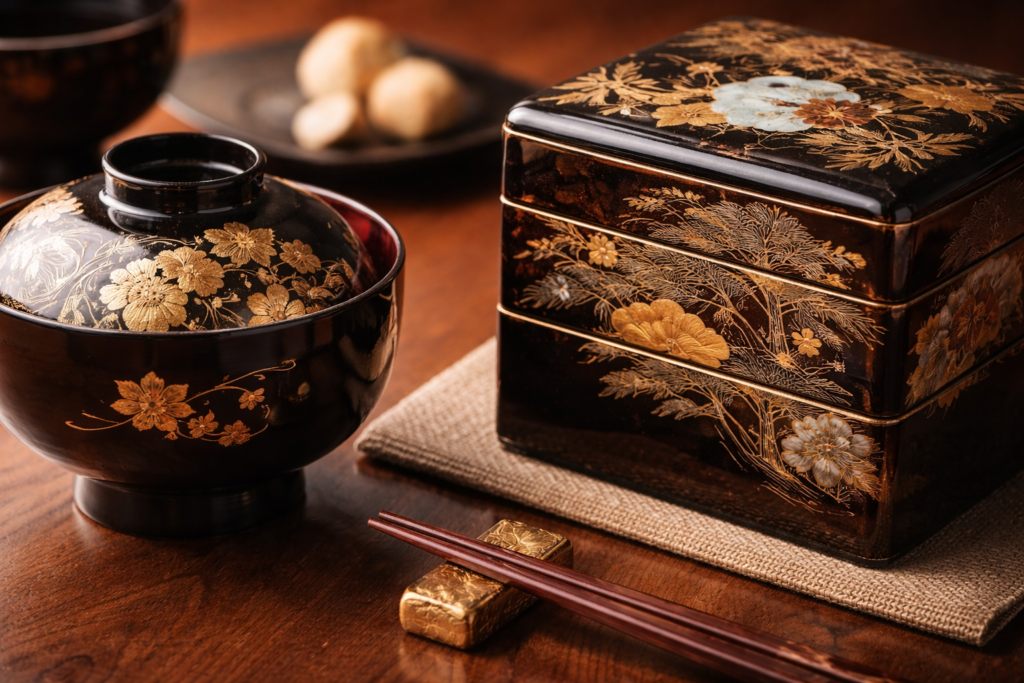
Wajima is famous for robust construction and careful groundwork. One hallmark is the use of jinoko (diatomaceous earth powder) in the undercoating to reinforce the piece.
Best for: heirloom-level trays/boxes, special gifts, collectors who want craftsmanship you can feel.
Aizu-nuri: versatile, everyday-friendly, giftable
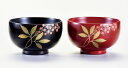
Aizu has a long lacquerware tradition and a wide range of items—from daily dining pieces to present-worthy sets.
Best for: your first “real” lacquerware piece, practical bowls and trays, gifts that balance beauty and usability.
Yamanaka: woodcraft heritage and practical forms
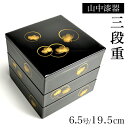
Yamanaka is often associated with strong woodturning tradition and functional shapes that work well for daily use.
Best for: comfortable everyday bowls and simple, elegant pieces that fit modern homes.
Tsugaru: distinctive layered textures and statement finishes

Tsugaru-style finishes are often sought for their bold surface character and depth.
Best for: a “wow” gift piece, people who choose with their eyes and love texture.
Quick shortcut:
- Want maximum robustness + prestige → Wajima
- Want easy daily use + broad selection → Aizu / Yamanaka
- Want strong visual identity / texture → Tsugaru
Choosing by Item: What to Buy First (and What to Buy for Gifts)
If you’re new to lacquerware, don’t start by trying to “buy the best.” Start by buying the most usable.
1) Bowls (miso/soup bowls): the best first purchase

If you buy just one item, choose a lacquer bowl. You’ll feel the difference immediately: it’s light, pleasant to hold, and comfortable at the lips.
What to decide:
- With lid vs without lid
- Black vs red interior (red can make soups look warmer)
- Size: everyday miso bowl vs larger soup bowl
2) Trays: the most versatile “Japanese lifestyle” piece
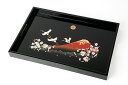
Lacquer trays are great for serving tea/sweets, sushi nights, or as a stylish organizer tray on a desk or entryway table.
Check:
- Size (A4-ish trays are super practical)
- Rim height (helps prevent sliding)
- Finish (gloss vs matte—matte can show fewer fingerprints)
3) Boxes & jewelry/keepsake boxes: gift-ready classics

Boxes are where techniques like maki-e shine. They’re often bought as gifts, especially when you want something “Japanese” without requiring the recipient to change daily habits.
Check:
- Hinge/closure quality
- Interior lining
- Clear photos of corners/edges (for vintage pieces)
4) Bento boxes / jubako: beautiful, but buy with intention

Lacquer bento boxes look incredible, but they’re not the most forgiving first purchase if you want truly worry-free daily use.
Good for:
- Occasional picnics
- Special meals
- People who hand-wash carefully
Avoid:
- Very hot foods
- Long soaking
- Rough cleaning
5) Plates & dinnerware: great for modern table settings

Lacquer plates can look stunning with both Japanese and Western food. Just confirm the finish type and care instructions.
Care Guide: Simple Rules for Long-Term Use
Lacquerware isn’t “fragile,” but it does have rules.
The basics (easy routine)
- Hand-wash with mild soap + a soft sponge
- Rinse promptly; dry immediately with a soft cloth
- Store only when fully dry
What to avoid (unless the maker explicitly says otherwise)
- Dishwashers
- Microwaves
- Long soaking
- Abrasive scrubbers
Why so cautious? Even though urushi can be highly resistant once cured, harsh detergents, high heat, and abrasion can dull finishes over time. (Also, curing conditions matter in production; urushi hardening is closely tied to temperature and humidity.)
Repair is part of the value
One underrated reason to buy quality lacquerware: it can often be repaired or refinished, extending life far beyond typical consumer goods.
Antique & Vintage Japanese Lacquerware: How to Buy with Confidence
Vintage lacquerware can be breathtaking—and risky. If you’re new, prioritize condition and documentation over “rare” claims.
Condition checklist (don’t skip)
- Chips, cracks, lifting, sticky areas
- Heavy repainting or unclear repairs
- Strong storage odor
- Missing lids or mismatched parts
Ask for close-ups of:
- Corners and rims
- Underside
- Interior corners (for boxes)
- Any visible damage
Beginner-friendly vintage picks
Start with:
- Simple trays or boxes in good condition
- Pieces with clear photos and straightforward descriptions
Avoid: - Heavily damaged maki-e unless you know restoration costs and accept the risk
Where to Buy Japanese Lacquerware (Japan + Online + Mercari)
Buying in Japan (best for travelers)
- Department stores: reliable selection, great packaging, easy gifting
- Craft shops & galleries: better explanations and curated quality
- Regional specialty stores: best for comparing origins and craftsmanship side-by-side
Buying online (international buyers)
Before purchasing, confirm:
- Material and finish type
- Origin / region
- Exact dimensions
- Return policy
- Packaging and shipping method (lacquerware needs careful cushioning)
Mercari Japan: great for vintage, discontinued, and “hidden gem” finds (overseas-friendly via cross-border support)
Mercari is a major Japanese C2C marketplace—excellent for finding:
- discontinued trays/boxes
- gift sets
- vintage-looking items (sometimes with region labels)
For overseas buyers who can’t use Mercari like domestic users, Mercari provides official guidance on cross-border transaction support, where Mercari or officially partnered cross-border services handle purchasing, export/customs procedures, and international shipping.
Mercari has also expanded cross-border initiatives (for example, its Hong Kong expansion announced for May 2025) and has discussed broader global strategy, including a “global app” initiative.

Mercari search keywords (Japanese)
- 漆器 (shikki), 漆 (urushi), 本漆 (hon-urushi)
- 輪島塗 (Wajima-nuri), 会津塗 (Aizu), 山中塗 (Yamanaka), 津軽塗 (Tsugaru)
- お盆 (tray), 汁椀 (soup bowl), 重箱 (jubako), 弁当箱 (bento box), 小物入れ (small box)
Mercari tips (especially for vintage)
- Avoid listings with few photos or vague material details
- Ask for edge/corner/underside photos
- Calculate total landed cost: item price + service fees + international shipping
Need Help Sourcing Authentic Pieces from Japan?
If you want authentic urushi but:
- don’t trust vague listings,
- want region-by-region comparisons,
- need clearer photos/verification, or
- want Japan-only options from local shops and galleries,
…I can help shortlist vetted options in Japan and support purchase/logistics through my Fiverr Japan sourcing gig (tell me your budget, preferred item type, finish/color, and destination country).
FAQ about Japanese lacquerware
Is Japanese lacquerware practical for everyday use?
Yes—especially bowls and trays. Start with a soup bowl if you want the most noticeable “why people love lacquerware” experience.
Is urushi “food safe”?
For finished lacquerware intended for dining, yes in normal use—focus on buying from reputable sources and follow care instructions.
Dishwasher or microwave safe?
Usually not recommended unless the maker explicitly states it is.
What’s the difference between Wajima-nuri and Aizu lacquerware?
Wajima is often associated with premium durability and distinctive groundwork (including jinoko undercoating), while Aizu is a versatile region with many everyday-friendly options.
Is vintage lacquerware safe to use?
It depends on condition. If there’s stickiness, lifting, strong odor, or unknown repairs, treat it as decorative until verified.


コメント