


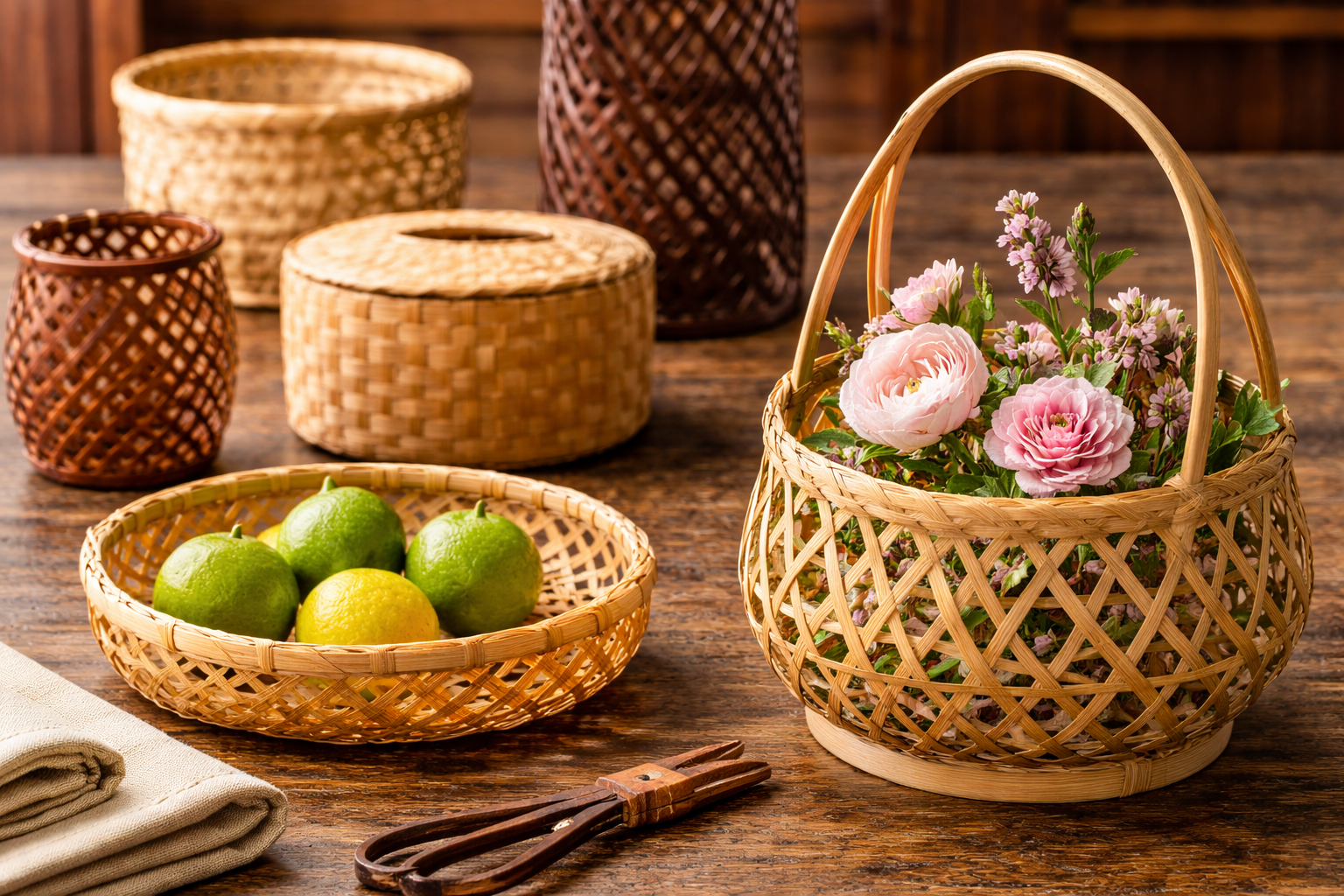
If you’re searching “Japanese basketry”, “Japanese basketry bamboo”, “takezaiku”, “takeami”, or “where to buy Japanese bamboo baskets”, you’re likely looking for one of three things: a beautiful everyday basket that actually lasts, a refined ikebana hanakago flower basket, or a collectible bamboo art piece. This guide explains the key terms (takeami vs takezaiku), why Japanese bamboo weaving is so respected, where to shop with confidence (including Beppu), and how to avoid “tourist-trap” purchases—plus practical shipping tips for overseas buyers.
For the bigger craft hub, start here: Japanese Craft: A Complete Guide. If you’re planning a Tokyo craft day that pairs perfectly with Mingei aesthetics, see One Day in Tokyo for Japanese Craft Lovers.
- What is Japanese basketry?
- Takeami vs Takezaiku: key terms you’ll see
- Why Japanese bamboo basketry is so respected
- The most famous hotspot: Beppu bamboo craft (Oita)
- What to buy: everyday baskets vs ikebana “hanakago” vs art pieces
- How to choose quality (and avoid tourist traps)
- Where to buy Japanese basketry in Japan (and what to expect)
- Packing, shipping, and overseas buying tips
- Related Guides (Internal Links)
- Want help sourcing Japanese basketry from Japan?
What is Japanese basketry?
“Japanese basketry” usually refers to woven bamboo craft, ranging from practical household baskets to refined ikebana flower baskets and gallery-level art. In Japanese, you’ll commonly see:
- Takeami (竹編み) = bamboo weaving
- Takezaiku (竹細工) = bamboo craft/bamboo work (a broader umbrella that includes weaving and other bamboo objects)
This category overlaps strongly with Mingei (folk craft) because many bamboo baskets are made for daily life, not just display. A great “train your eye” museum stop is included here: Tokyo Craft Day: Aoyama Square + Mingeikan.
Takeami vs Takezaiku: key terms you’ll see
If you’re writing for overseas buyers, clarifying these terms helps a lot:
- Takeami (bamboo weaving) focuses on weaving techniques and basket forms.
- Takezaiku (bamboo work) can include baskets, home goods, and even refined art objects.
Why this matters: shops may label products as “takezaiku” even when the item isn’t a classic woven basket. For buyers, the safest approach is to judge the object by weave density, rim finishing, stability, and maker info (we’ll cover that below).
Why Japanese bamboo basketry is so respected
Japanese basketry has a reputation for:
- Precision and structure (tight weaving, clean rims, stable form)
- Material intelligence (using bamboo’s strength, flexibility, and natural surface)
- A spectrum that spans everyday tools → design objects → collectible art
That range is why “Japanese basketry” can mean anything from a bread basket to an exhibition-grade sculptural piece.
If your readers like “wood and natural materials” crafts, cross-link: Hakone Yosegi-Zaiku Guide (another natural-material craft with strong provenance).
The most famous hotspot: Beppu bamboo craft (Oita)
If you only name one place in Japan for bamboo basketry, many English-language resources point to Beppu (Oita, Kyushu).
Japan’s official tourism site notes Beppu’s bamboo craft history and ties its growth to Beppu’s rise as an onsen destination, where durable bamboo items became popular souvenirs. There’s also a dedicated Beppu City Traditional Bamboo Crafts Center where visitors can view works and join workshops (often requiring advance reservation). For an “official craft” angle, Japan Traditional Crafts Aoyama Square’s site includes BEPPU Take Zaiku (Bamboo Basketry) and notes the craft’s material basis in a bamboo species suitable for weaving.
Practical traveler note: Beppu is ideal if you want to combine onsen + craft shopping + workshop in one trip.
What to buy: everyday baskets vs ikebana “hanakago” vs art pieces
Everyday-use baskets (best first buy)
Great for travelers and first-time buyers:
- durable
- functional at home
- less fragile than ceramic souvenirs
Best beginner picks
- small storage basket (entryway keys, mail, craft notions)
- bread/fruit basket
- simple tray-style weave pieces
If your readers are choosing between fragile pottery and “safe-to-ship” crafts, link: Hagi-yaki vs Kutani-yaki Buyer Guide (helps them decide what’s worth shipping).
Ikebana flower baskets (hanakago)
Japanese bamboo weaving is especially known internationally for basket forms used in ikebana. These can range from simple “useful beauty” to collector-grade.
Buyer tip: hanakago value often comes from shape balance, rim/handle finishing, and overall proportion—not just “complexity.”
Contemporary bamboo art
If your audience includes collectors, mention that Japanese bamboo basketry has a strong contemporary art lane—galleries and prizes spotlight emerging artists and studios.
Content expansion idea: later you can publish a dedicated “Japanese bamboo art” post that targets collectors and links back here.
How to choose quality (and avoid tourist traps)
Use this checklist when buying in person or judging online photos.
Craft quality checklist
- Weave density: tighter weaving usually signals higher skill and durability
- Rim/edge finish: clean, even rims; no sharp splinters
- Symmetry and stability: basket sits flat; form doesn’t wobble
- Bamboo surface: consistent finish, no obvious cracking or drying damage
- Smell/feel (in person): should feel dry and clean—not damp or musty
Provenance checklist (authenticity shortcut)
- Clear store identity (address/phone/hours)
- Materials disclosed (type of bamboo, finishing)
- Maker/workshop attribution when available
If a shop can’t answer basic questions, treat it as a “gift shop item,” not a craft purchase.
Pro tip for online listings: ask for 3 photos—(1) rim close-up, (2) bottom/base, (3) side profile. Those angles reveal quality fast.
Where to buy Japanese basketry in Japan (and what to expect)
Beppu (best for “basketry destination” travel content)
- Visit the craft center for context + workshop opportunities
- Use Beppu-focused guides to shortlist souvenir shops and specialist sellers
Buying strategy in Beppu: do the workshop or museum/craft center first, then shop—your eye will be sharper.
Curated “traditional crafts” channels
If you want higher confidence for buyers, official traditional craft platforms and directories can be a safer starting point than random marketplaces.
If your readers are Tokyo-based and want curated national crafts in one place, link: Tokyo Craft Day: Aoyama Square + Mingeikan.
Regional bamboo crafts beyond Beppu (optional expansion)
If you later build a “regional crafts” cluster, sources like Kogei Japan document multiple local bamboo craft traditions (e.g., Katsuyama takezaiku) and typical basket types.
Packing, shipping, and overseas buying tips
- Basketry is lightweight but shape-sensitive: crushing is the main risk, not breakage.
- Ask for rigid outer packaging (box size matters more than bubble wrap).
- For higher-end pieces, consider insured shipping and keep item photos + receipts.
- Avoid overbuying on impulse: baskets take up volume fast, even if they’re light.
Quick shipping script (copy/paste for sellers):
“Please pack in a rigid box with padding so the basket cannot be crushed or move during shipping.”
If your reader is also buying paper goods (easy-to-ship gift items), cross-link:
Related Guides (Internal Links)
- Japanese Craft: A Complete Guide
- Tokyo Craft Day: Aoyama Square + Mingeikan (Mingei context + curated crafts)
- Hakone Yosegi-Zaiku Guide (natural-material craft, buyer checklist)
- Hagi-yaki vs Kutani-yaki Buyer Guide (pottery comparison + shipping mindset)
- Washi Paper Crafts in Japan (giftable, lightweight crafts)
Want help sourcing Japanese basketry from Japan?
If you want to buy authentic Japanese basketry—especially specific styles (daily baskets vs ikebana hanakago), multiple pieces, or hard-to-find makers—my Fiverr Japan Sourcing Gig can help with:
- purchasing from Japanese shops
- consolidating multiple orders into one shipment
- basic inspection (weave finish, rim quality, size confirmation)
- international shipping coordination
コメント