


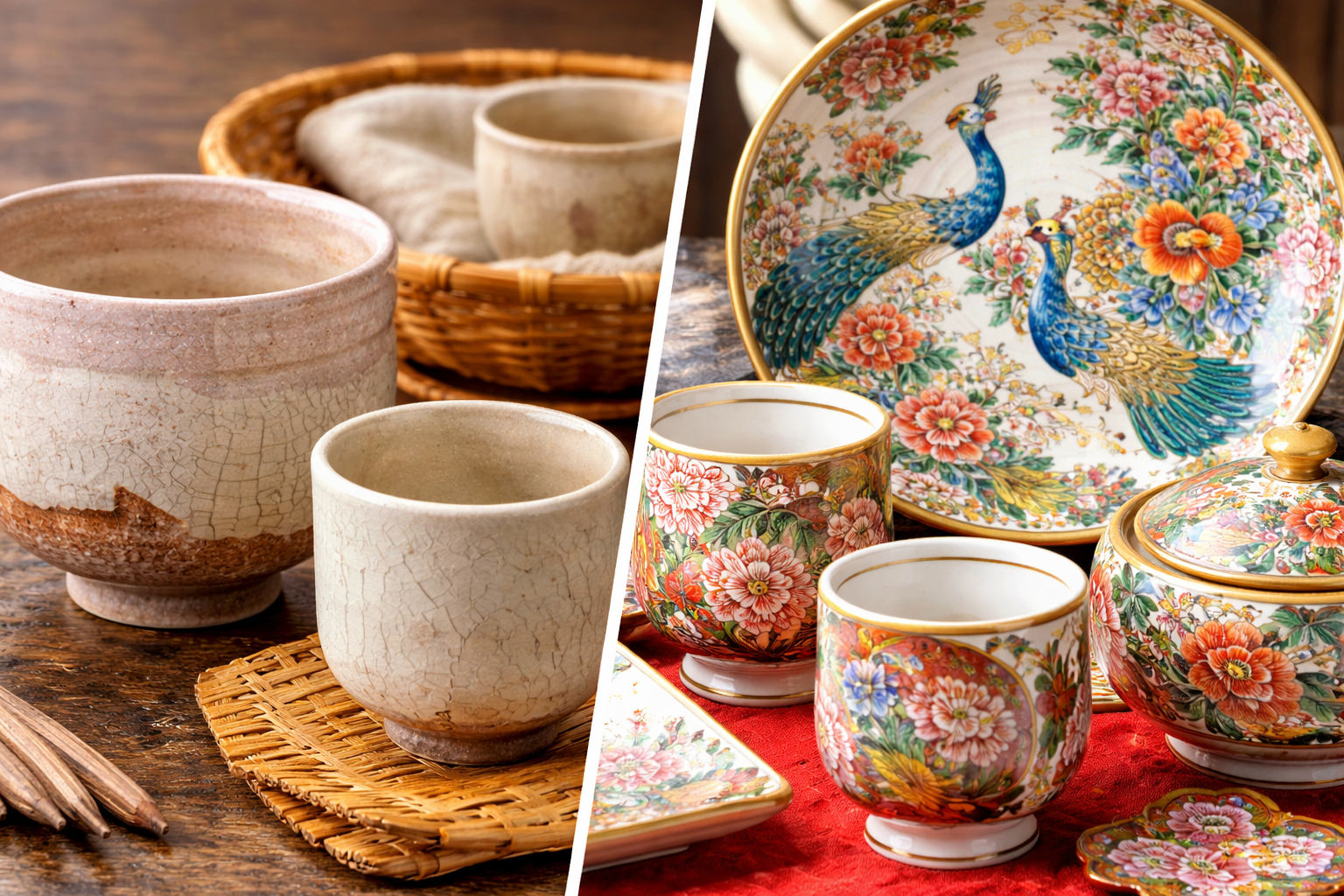
If you’re searching “Hagi yaki pottery”, “Kutani pottery Kanazawa”, “Hagi ware vs Kutani ware”, or “Japanese pottery styles”, you’re probably trying to choose between two very different kinds of beauty: Hagi-yaki, loved for its quiet texture and the way it evolves with use, and Kutani-yaki, known for bold overglaze painting and vivid color. This buyer guide explains the differences, what to buy for each style, how to spot quality, and how to shop safely as a traveler or overseas buyer—especially when shipping fragile pieces.
For the big-picture context of Japanese crafts, start here: Japanese Craft: A Complete Guide. If you’re planning a Tokyo “see and buy” day before shopping pottery, pair this with Tokyo Craft Day: Aoyama Square + Mingeikan + Ginza Takumi.
- Why compare Hagi-yaki and Kutani-yaki?
- What is Hagi-yaki?
- What is Kutani-yaki?
- Hagi vs Kutani: quick buyer comparison
- How to choose a good piece (quality checklist)
- Care tips (especially for Hagi’s “changes with use”)
- Where to buy (Japan travel + overseas sourcing logic)
- Want help sourcing and consolidating pottery purchases from Japan?
Why compare Hagi-yaki and Kutani-yaki?
If you’re shopping Japanese pottery as a traveler or overseas buyer, Hagi-yaki and Kutani-yaki often sit at opposite ends of the spectrum:
- Hagi-yaki is prized for quiet texture and the way it changes with use (“Hagi no Nanabake,” often described as “seven transformations”).
- Kutani-yaki is loved for bold, painterly surface design—especially overglaze enamel decoration with vivid colors.
This makes a comparison guide extremely helpful for buyers trying to decide:
“Do I want something calm and earthy, or something visually expressive and decorative?”
If your readers also collect other regional crafts, link laterally to: Hakone Yosegi-Zaiku Guide (another “regional craft buyer guide”).
What is Hagi-yaki?
Hagi-yaki (Hagi ware) is associated with Hagi City in Yamaguchi Prefecture and is often described as simple, minimally decorated pottery that emphasizes the character of the clay.
The signature feature: it changes as you use it
Hagi ware is frequently explained as slightly porous, with fine crazing/crackle that can absorb tea/sake and gradually shift the surface tone over time—part of its charm.
Buyer mindset: you’re not buying a “perfectly fixed” surface—you’re buying a piece that can become more personal with use.
Why tea people love it
Modern craft explainers often reference Hagi’s strong place in tea culture and the appeal of its warm, rustic texture. Hagi often rewards slow attention: balance in the hand, rim feel, and the way light catches subtle glaze variation.
What to buy (best starter pieces)
If you’re new to Hagi, start with:
- Yunomi (tea cups) — daily use, easy to appreciate
- Guinomi / sake cups — small, collectible, great gifts
- Chawan (tea bowl) — iconic but higher price and more personal preference
What is Kutani-yaki?
Kutani-yaki (Kutani ware) is made in the Kaga region of Ishikawa Prefecture and is known for vivid colors, bold designs, and overglaze decoration (painting on the glazed surface and firing again).
Overglaze enamel: what it means for buyers
Overglaze decoration is part of Kutani’s identity: it’s where the “art” lives—brushwork, line confidence, color layering, and composition. A good Kutani piece reads almost like a painting you can use.
What to buy (best starter pieces)
For first-time buyers:
- Small plates — easiest to display or use
- Teacups — strong gift item, high “wow” factor
- Display plates — classic Kutani behavior: plates used as décor
If your audience is buying gifts and wants something light and shippable, cross-link to: Japanese Temari Ball Guide.
Hagi vs Kutani: quick buyer comparison
If you want “use-and-age beauty”
Choose Hagi-yaki.
- Best for: tea cups (yunomi), tea bowls (chawan), sake cups
- Vibe: quiet, earthy, subtle
- Note: it requires a bit more care due to absorbency
If you want “art on porcelain”
Choose Kutani-yaki.
- Best for: plates, cups, gift pieces, display items
- Vibe: colorful, decorative, statement-making
- Note: overglaze decoration is part of the identity
How to choose a good piece (quality checklist)
Hagi-yaki checklist
- Feel the clay: warm, slightly soft visual texture (not sterile)
- Foot (base) finishing: clean and stable
- Crazing is fine—cracks are not: you want intentional surface character, not structural damage
- Rim feel: smooth and comfortable (you’ll notice this immediately on cups)
- Balance: feels steady and natural in hand (especially on yunomi)
Kutani-yaki checklist
- Overglaze precision: crisp outlines, confident brushwork, clean color fills
- Balance of design: the composition should feel intentional (not “sticker-like”)
- Surface feel: no gritty paint bumps unless it’s clearly part of the style
- Color harmony: even bold Kutani should feel controlled, not chaotic
- Backstamp/marking (when present): not a guarantee of quality, but helpful for provenance
Care tips (especially for Hagi’s “changes with use”)
Because Hagi ware is often described as porous and absorbent, many guides recommend:
- soaking a new piece in water before first use
- washing thoroughly after use
- drying well before storage
These steps help prevent odor/mold issues while still letting the piece develop character.
Simple rule: if you’re not going to use it for a while, make sure it’s truly dry before closing it into a box or cabinet.
Where to buy (Japan travel + overseas sourcing logic)
Buying in Japan (regions + Tokyo strategy)
- Hagi-yaki: best hunted in Yamaguchi/Hagi-area craft channels, tea-oriented pottery shops, or curated traditional craft retailers.
- Kutani-yaki: easiest to shop around Ishikawa (Kaga/Komatsu/Nomi/Kanazawa area) and craft-focused stores; regional museums and craft centers also help you understand motifs.
Tokyo strategy (practical): if your reader can’t go to the production regions, recommend “curated national craft” stops first (better chance of provenance clarity). Aoyama Square is the obvious add-on in your Tokyo itinerary:
Buying from overseas (shipping + reorders)
Common friction points:
- fragile shipping (especially plates and tea bowls)
- confusing variants and maker lines
- buying across multiple shops to build a set
Best practices:
- buy one “hero piece” first, confirm you love the feel, then scale up
- ask for insured shipping + strong packaging
- keep photos of labels/cards/receipts for reorders
Packaging note: for plates, “edge protection + double boxing” reduces damage risk dramatically.
Want help sourcing and consolidating pottery purchases from Japan?
If you want to buy Hagi-yaki or Kutani-yaki—especially matching sets, gift bundles, or fragile items that need careful packing—I can help via my Fiverr Japan Sourcing Gig with:
- purchasing from Japanese shops
- consolidation into one shipment
- basic inspection (chips, glaze condition, pattern accuracy)
- international shipping coordination

コメント