

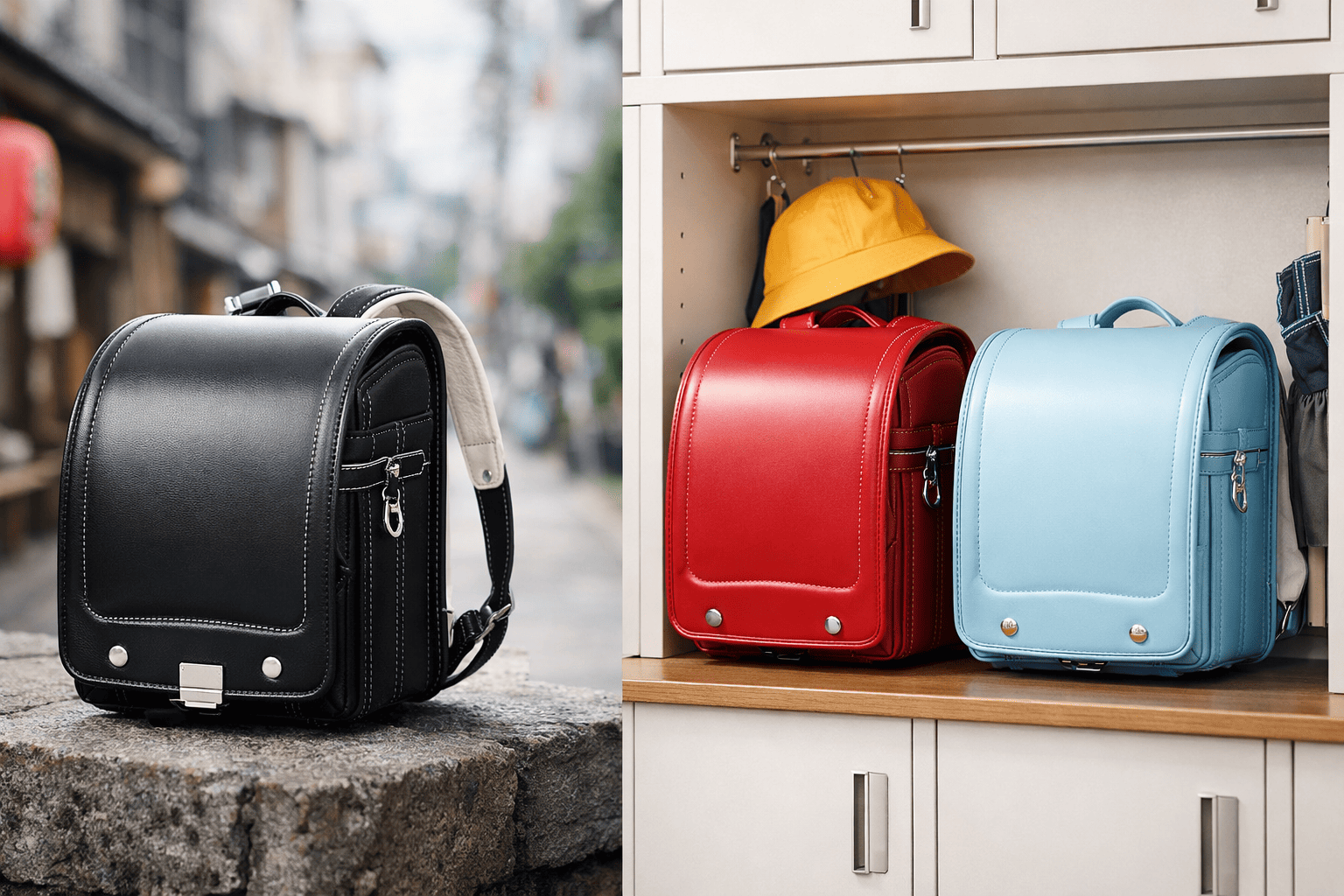
Randoseru (ランドセル) is Japan’s iconic box-shaped school backpack—famous for its sturdy build, structured shape, and cultural “back-to-school” symbolism. In this guide, you’ll learn what randoseru means, typical price ranges in Japan, famous brands, whether adults can wear it, and the best places to buy (including tax-free tips).
- What Is Randoseru? (Meaning & Origin)
- Why Randoseru Is Famous: Key Features
- Randoseru Price Guide in Japan
- Famous Randoseru Brands (Popular Makers in Japan)
- Randoseru for Adults: Pros, Cons & How to Choose
- Where to Buy Randoseru in Japan (Stores, Online & Tax-Free Tips)
- How to Choose the Right Randoseru (Checklist)
- FAQ
What Is Randoseru? (Meaning & Origin)
Randoseru is the structured backpack traditionally used by Japanese elementary school students (typically six years). It’s widely explained as coming from the Dutch word ransel, meaning “backpack.”
A short origin story
A commonly cited milestone is 1885, when Tokyo’s prestigious Gakushūin Primary School adopted a standardized backpack style so all children would walk to school and carry their own supplies—an idea tied to educational equality at the time.
Why Randoseru Is Famous: Key Features
Randoseru isn’t “just a backpack.” It’s a product category with clear expectations in Japan.
1) Built for daily use over years
Randoseru is designed to withstand everyday school life—heavy textbooks, weather changes, and constant wear. (Many families expect it to last the full elementary-school period.)
2) Structured shape = easy packing
The boxy structure helps keep books and supplies neat and protected, especially compared with soft backpacks.
3) Comfort-focused fit
Major makers emphasize shoulder comfort and fit features (strap design, back padding, and support structures).
4) Materials: synthetic to premium leather
You’ll commonly see:
- Synthetic leather (often lighter, more affordable)
- Cowhide leather (classic premium)
- Cordovan (high-end leather option in some lines)
5) Colors & trends: a cultural shift (writer’s note)
Writer’s note (Japanese perspective): When I was a child in Japan, it was very common for boys to carry black and girls to carry red. Today, there’s much more variety—navy, brown, muted tones, and pastels are popular, and it’s also normal to see girls carrying black (and boys choosing colors beyond black, too). (You’ll notice this shift clearly when browsing modern catalogs and store displays.)
Randoseru Price Guide in Japan
Prices vary widely, but you can still think in clear “tiers.”
Typical price range (what to expect)
You’ll often see a broad market range of about ¥10,000 to ¥100,000+, depending on material and maker.
For many families, a frequently cited “typical budget zone” is around ¥50,000–¥70,000.
What changes the price?
- Materials: premium leathers (including cordovan) tend to cost more.
- Handmade / workshop production: craft-focused makers price higher due to labor and finishing.
- Comfort + lightweight engineering: brands highlight fit/comfort tech and lighter builds.
- Limited colors / seasonal releases: popular colors and special editions can sell out and raise demand.
Famous Randoseru Brands (Popular Makers in Japan)
Below are widely recognized names you’ll see when researching “famous randoseru brands.” This is not a ranking—just a practical starting list.
Craft-focused / premium (often workshop-led)
Widely available / mainstream favorites
If you want a “Japan classic” buying experience with lots of choices, start with the big makers. If you care most about materials and finishing, compare craft-focused brands and check their catalogs/showrooms.
Randoseru for Adults: Pros, Cons & How to Choose
Yes—adult randoseru exists, and some makers market adult-oriented lines as business-style backpacks inspired by randoseru design.
Why adults buy it
- Distinct silhouette (clean, structured, often logo-light)
- Durable, long-life feel (especially leather)
- Good for documents and careful packing
Downsides to know
- Weight + rigidity: structured builds can feel heavier than soft backpacks
- Capacity fit: some traditional proportions may feel small for modern work gear
- Styling: it’s still strongly associated with school in Japan—some love that, others don’t
How to choose (adult-friendly)
- Confirm laptop fit by internal dimensions (don’t rely on “A4 fits” alone)
- Choose muted colors and minimal detailing for everyday work use
- Prioritize comfortable straps and back padding (especially if commuting)
Randoseru Remake: Turning an Old School Bag into Accessories
In Japan, some families don’t simply store a randoseru away after elementary school—they upcycle it through “randoseru remake” services. The original leather (or synthetic leather) is repurposed into practical small goods such as pass cases (IC card holders), wallets, coin purses, key holders, and more—so the memories can live on in everyday items.
You can also find remake items sold by independent makers on marketplaces like Creema, where many listings are explicitly labeled as randoseru remake (e.g., pass cases and wallets).
On major marketplaces like Rakuten, you’ll see a wide selection of randoseru remake products (pass cases, wallets, multi-item sets).
Quick search terms (copy & paste):
- On Creema: 「ランドセルリメイク」, 「ランドセル リメイク パスケース」, 「ランドセル リメイク 財布」
- On Rakuten: 「ランドセル リメイク パスケース」, 「ランドセルリメイク財布」
Tip: If you’re buying a randoseru as a gift, it can be meaningful to mention this “remake” culture—some families love the idea that the bag can be transformed later.
Where to Buy Randoseru in Japan (Stores, Online & Tax-Free Tips)
1) Department stores (easy comparison)
Great for seeing multiple brands in one place, especially during seasonal “randoseru fairs.”
2) Brand flagship stores & showrooms (best for serious buying)
Ideal for confirming:
- fit on the back/shoulders
- color accuracy in person
- aftercare/warranty details (Brands like Kurokawa and Nakamura publish showroom and event information.)
3) Official online shops (best if you plan ahead)
Useful for:
- catalog browsing
- checking full color lines
- ordering when you can’t visit a store (Examples: Tsuchiya, Seiban, Fit-chan, Fuwarii all operate official sites.)
4) Buying second-hand (Mercari) — and how to use it from overseas
If you’re hunting for a discontinued color, a specific brand, or simply a better deal, second-hand randoseru is also commonly listed on Mercari, Japan’s biggest flea-market marketplace. For overseas buyers, Mercari supports cross-border purchasing through official partner services (the seller ships domestically, and the partner handles international shipping and export procedures).
If you’re outside Japan, here’s my step-by-step guide on how to buy from Mercari Japan safely (proxy services, fees, shipping tips, and common pitfalls):

5) Buying from overseas (or avoiding mistakes)
If you’re outside Japan—or you’re worried about getting the wrong size, model year, or a confusing shipping/return policy—using a Japan-based sourcing helper can save time and reduce risk.
If you share your budget, preferred color, and whether it’s for a child or adult use, I can shortlist reputable options in Japan and help you source from official channels or trusted retailers—especially for popular colors that sell out quickly.
How to Choose the Right Randoseru (Checklist)
- Who is it for? child daily use / adult commuting / gift / collectible
- Budget tier: entry (¥10k–¥30k), typical mid (¥50k–¥70k), premium (¥80k+)
- Material: synthetic (lighter, often lower cost) vs leather (premium feel)
- Comfort: straps, back padding, support structure
- Capacity: A4 file fit, tablet/laptop fit (check dimensions)
- Color/style: classic vs modern neutrals/pastels (today’s options are broad)
- Where you’ll buy: department store comparison vs official shop/showroom
- Tax-free/export plan: confirm eligibility and procedure at the store
FAQ
What does “randoseru” mean?
It refers to Japan’s structured elementary-school backpack, and the word is commonly explained as coming from Dutch ransel (“backpack”).
How much does a randoseru cost in Japan?
A broad range is often cited as ¥10,000 to ¥100,000+, with many families shopping around ¥50,000–¥70,000 depending on material and maker.
Are there famous randoseru brands I should know?
Commonly researched names include Seiban, Fit-chan, Fuwarii, Tsuchiya Kaban, Kurokawa Bag Studio, Nakamura Kaban, and Ikeda-ya.
Can adults use randoseru?
Yes—some makers sell adult-oriented “randoseru-inspired” bags as business backpacks.
Can I buy randoseru tax-free in Japan?
Often yes at participating tax-free retailers, generally when same-day purchases at the same store reach ¥5,000+ (excluding tax) and you meet visitor/documentation requirements. Confirm the exact process at checkout.

コメント